30 May 2006

“Crunchy” conservatives.


Some folks are trying to be real conservatives, but they appear to be just as unthinking as many of the folks in the movement.

I first read Rod Dreher’s Crunchy Con Manifesto on Ben Witherington’s blog, and found it sufficiently obnoxious enough to rant about.

Why “crunchy”? Probably because they don’t consider themselves to be soggy. Considering how most activism is really just an organized reaction to things people are dissatisfied about, Dreher, author of Crunchy Cons, decided to market his particular variety of conservatism by writing a creed, or “manifesto,” explaining what makes him so very different. I’ll list his points, with my commentary.

1. We are conservatives who stand outside the contemporary conservative mainstream. We like it here; the view is better, for we can see things that matter more clearly.
Yeah, that’s what every self-imagined non-conformist says. All of them claim to be outside the mainstream. God forbid any single one of them happen to be normal. Unless we’re ridiculed for being different… in which case we’re rather desperate to be considered normal, and try to argue convincingly that we really are normal and not really some zany fringe group like we’re depicted. If ever the Crunchy Cons get ostracized from the centers of political power because they’re seen as fringe elements or extremists, their organizers will make that same desperate lunge for the center, just to hold on to any pull they might have gained. Just like when Pat Buchanan left the Reform Party.
2. We believe that modern conservatism has become too focused on material conditions, and insufficiently concerned with the character of society. The point of life is not to become a more satisfied shopper.
It’s not just conservatism. It’s liberalism too. Your average progressive is encouraged to think about fair trade and global impact when they make their purchases, yet they’re never encouraged to think about whether they should make such purchases in the first place. They’re encouraged to ask, “Should my new car be environmentally friendly?” not, “Does a family with two drivers actually need a third car?” This is a valid point, but it’s not solely a conservative issue.
3. We affirm the superiority of the free market as an economic organizing principle, but believe the economy must be made to serve humanity’s best interests, not the other way around. Big business deserves as much skepticism as big government.
How on earth can you have a free market and the restraints upon it necessary to make it serve humanity’s best interests? Doesn’t this idiot understand that this statement is self-contradictory? He’s calling for both capitalism and socialism. This is like saying, “Americans shouldn’t have to pay taxes, but they must be required to finance their government.”
4. We believe that culture is more important than politics, and that neither America’s wealth nor our liberties will long survive a culture that no longer lives by what Russell Kirk identified as “the Permanent Things”—those eternal moral norms necessary to civilized life, and which are taught by all the world’s great wisdom traditions.
On the contrary. In rejecting the “Permanent Things,” we are moving the country towards more liberties and more wealth. Fr’instance, we’re in the process of legalizing gambling. It started with Nevada and New Jersey, spread to the state lotteries, Indian reservations, and Mississippi River, and is making lots of money on the internet. More people are free to gamble; more people are making money off it. Porn, prostitution, and drugs are rapidly following. The decay of morality means greater freedom to sin, and great profit to be made from sinful behaviors. America’s widening freedoms are turning us more and more the “Great Satan” that the Muslims already call us.
5. A conservatism that does not recognize the need for restraint, for limits, and for humility is neither helpful to individuals and society nor, ultimately, conservative. This is particularly true with respect to the natural world.
Very true. Probably the only profound statement Dreher makes.
6. A good rule of thumb: Small and Local and Old and Particular are to be preferred over Big and Global and New and Abstract.
In my experience as a reporter, small business and local government is often just as corrupt, and much less accountable, than big business and big government. Small and local does not mean noble. Small means small. Local means local. Same with any other adjective. Old and particular ideas can be just as evil as new and abstract ideas.
7. Appreciation of aesthetic quality—that is, beauty—is not a luxury, but key to the good life.
Nah. It’s appreciation of the inherent goodness in an object. I would rather have a good, functioning car than a snazzy one. I would rather have an honest, faithful wife than a gorgeous one. I would rather worship a good God than a popular one. Beauty is superficial and misleading, which is why Satan appears as an angel of light.
8. The cacophony of contemporary popular culture makes it hard to discern the call of truth and wisdom. There is no area in which practicing asceticism is more important.
You mean a person who watches a lot of movies can’t tell the difference between fact and fiction? No wonder you and your kind are so paranoid about The Da Vinci Code. I am not confused by pop culture because I have been taught to critically think. Anyone who has been taught critical thinking can discern truth; anyone who prays and reads scripture regularly can learn the Holy Spirit’s wisdom. Depriving yourself can’t teach this to you; you can’t practice your thinking skills when you’re deprived of things to think about. There is a purpose behind asceticism, but it’s not to clear your head so you can think. It’s so you can listen. You need to learn to think regardless of the cacophany.
9. We share Kirk’s conviction that “the best way to rear up a new generation of friends of the Permanent Things is to beget children, and read to them in the evenings, and teach them what is worthy of praise: the wise parent is the conservator of ancient truths…. The institution most essential to conserve is the family.”
True. But unfortunately many families are dysfunctional. So while we work to conserve functional families, we need to likewise create support systems to make up for the poor child-rearing of dysfunctional families. And I don’t mean prisons. I mean better public schools, pop culture that encourages good behavior rather than consumerism, and incentive systems that teach people to be better parents. Otherwise all you’re rearing up are isolated exceptions to the rule.
10. Politics and economics will not save us. If we are to be saved at all, it will be through living faithfully by the Permanent Things, preserving these ancient truths in the choices we make in everyday life. ln this sense, to conserve is to create anew.
If we are to be saved at all, it is through Jesus Christ and a relationship with him, not by following the Permanent Things (or the Law, or the Tao, or whatever you else want to call it). It is to obey him and demonstrate this obedience by loving those who don’t obey regardless. And again—because I have to be logical in all this—exactly what fool writes a political manifesto in which he denounces the very politics he claims to embrace?

Maybe they’re crunchy because they crumble so easily.

29 May 2006

Buyer's remorse.

Kerry’s getting married!

I say this because my sister Kerry likes to greet people by saying, “I’m getting married!” which she won’t be able to say anymore in a month or so, which will mean she’ll have to come up with a new saying. Probably “I got married!” or something like that.

Thank God, for her wedding I don’t have to wear another stupid tuxedo. But I figured I should wear something nice, and since all the suits I have in my closet are secondhand junk, I decided it was time for me to finally buy some decent threads. “Decent” means “not another polyester monstrosity from the Salvation Army that I can wash in the regular cycle.” I wanted something lightweight, made of wool and silk, custom-fitted, and no more than $500 including tax and alterations.

My budget, by the way, is not based on what I can afford. I can afford better. My budget is based on what I want to pay for something. If I can’t find something for the price I want, I don’t buy it. This is why I don’t yet have a video iPod; I’m not paying more than $200 for it, and I’m not getting one until I can find it for that amount. Some call it cheap. I call it setting my own value on something.

My budget put me at the Men’s Wearhouse in Capitola on Saturday. They frequently advertise suits at $200, which is an old marketing strategy to get you into the store to get the cheap suit, and then you wind up finding a nicer one for “only” $300, and talk yourself into spending the extra $100 because the nicer suit is so much nicer. My chances were good at staying within my budget.

The Men’s Wearhouse also has another strategy. They try to sell you an ensemble, not just a suit. Yes, you’ll have a suit, but what shirt will you wear with it? What tie? How about shoes? And it makes sense. Why buy a custom-fitted suit, then wear your lousy $10 Walmart sneakers and your $4 thrift-store collared shirt under it? So they sold me on the shoes, some dress socks, two shirts, two ties to go with the shirts… and I went $350 over my budget, but I figured I could afford it, and I'd look good.

It was on the bus ride home that this started to annoy me.

I had a budget of $500. I spent, instead, more than $800. For what? Two shirts, two ties, socks, and shoes. Good quality clothing, but have I ever spent that much on those individual items? I looked my receipt over. Have I ever spent more than $30 on a pair of shoes? No. What, then, was I doing spending $135 on a pair of shoes? Did I like them? Well, I liked them better than the other shoes in the store, but they weren’t particularly comfortable, and felt a little loose in the toe and heel, and stiff otherwise. I wear sandals 90 percent of the time anyway; all shoes feel uncomfortable to me, but the last thing I need at a wedding is to be constantly agitated by uncomfortable shoes. And it was already an uncomfortable price.

“All right,” I figured, “when I go back to pick the suit after it had been altered, I’m returning the shoes.” I looked again at the receipt. “And the socks. I’m not spending $20 for socks.”

Saturday night, as I was going to bed, I decided to look at that receipt again.

The shirts were $55 apiece. They’re nice shirts, and it’s really difficult to find shirts in my neck size. I have a size 19 neck. (Go ahead and make your wisecracks about it.) Most shirts made for a size 19 neck are 2XL or 3XL, which means I look like I’m wearing a small pup tent, especially with all the extra fabric on the sleeves. But in my mind, shirts should be no more than $30. So, back they’d go. The ties—one was $20 and one was $30. Those are normal prices for silk ties. But I have ties, and like them better. Back they’d go.

And Sunday morning, I decided I wasn’t going to wait until next week to return everything; I was doing it today.

The salesman didn’t look too pleased when I returned all my merchandise. “You’re still getting the suit?” he asked, and of course I said yes. If I like how the alterations come out, I’ll likely get many more suits from them. The prices are good. But I couldn’t justify the extra expense to myself.

Besides, I have yet to buy wedding presents.

26 May 2006

Saw the new ๐˜Ÿ-๐˜”๐˜ฆ๐˜ฏ movie.

Yesterday, while walking home from the library, a bird tried to land on my head. Three times. It was like a scene out of The Birds, only with just one of them. What the heck was that about?

Tonight I saw X-Men 3, which didn’t suck as much as the internet reviews made it out to. I think professional movie reviewers forget that your average movie-watcher will be perfectly happy with a decent plot that noticeably advances, believable enough acting without over-emoting, special effects that don’t look like the computer animation from VeggieTales, and humor that doesn’t confuse socially offensive with funny.

…Actually, your average movie-watcher would put up with a movie that didn’t have any of those things so long as someone attractive flashed a boob. In my case, however, I want all those things in the movies I watch, and am happy when they’re in there and annoyed when they’re not. In the case of X-Men 3 the plot was decent, the acting was decent, the special effects were entertaining, and the producers are retarded if they don’t make another sequel. And don’t worry about killing off more characters; there are plenty of mutants to replace ’em with.

That’s what the X-Men comic books are all about: Replacements. You write a bunch of comic book superheros, each with a superpower or two to keep ’em interesting, put them in a book and let them percolate among the fans. The more popular ones get their own books and leave—to be replaced by more new mutants. The less popular ones turn evil (and thus become more interesting) or get killed off or disappear or something. Once the popular ones become boring, rotate in the new mutants. The fans keep reading, the money keeps pouring in, and everyone’s happy.

Tomorrow I have to buy clothes. I hate shopping for clothes. It’s gotta be done, though. Hope no more birds attack.

25 May 2006

๐˜Œ๐˜ฏ๐˜ณ๐˜ฐ๐˜ฏ: ๐˜›๐˜ฉ๐˜ฆ ๐˜š๐˜ฎ๐˜ข๐˜ณ๐˜ต๐˜ฆ๐˜ด๐˜ต ๐˜Ž๐˜ถ๐˜บ๐˜ด ๐˜ช๐˜ฏ ๐˜ต๐˜ฉ๐˜ฆ ๐˜™๐˜ฐ๐˜ฐ๐˜ฎ.

Kent’s Recommended Watch:
Alex Gibney:
Enron: The Smartest Guys in the Room

Enron executives Kenneth Lay and Jeffrey Skilling were convicted today of fraud and conspiracy in their attempts to hide Enron’s losses from investors. Read the FoxNews article.

Coincidentally, I finally got this documentary, Enron: The Smartest Guys in the Room from Blockbuster, after waiting six weeks to see it. I watched it Tuesday. It’s pretty fascinating; it’s another cautionary tale of good old fashioned greed taking over good old fashioned capitalism.

The folks who ran Enron really just wanted to make lots of money, didn’t care how they did it so long as they could get away with it, and did… with help from the SEC, several prominent investment banks, the Arthur Andersen accounting firm, and every shareholder who only looked at Enron’s soaring stock prices and never asked what the basis was for this continuing upward climb. It was also entertaining to watch Enron’s energy traders mess with California during our recent energy crisis. (The documentary claims they created the problem; I think we created our own problem by botching energy deregulation, allowing Enron to easily take advantage.)

One of the people I watched this with was stunned at how much Enron got away with—and how much complicity went on in order to enable Enron to get away with it. But human evil never surprises me anymore. One learns to expect it, especially when humans are tempted with tremendous sums of money or power. The amazing thing is when they aren’t corrupted by it. The amazing thing is when people voluntarily give up power. That’s what we find so unbelievable; I have no trouble with the idea of people trying to seize more and more until it becomes their undoing.

I should warn you though. Parts of this video should be renamed Enron: The Most Gratuitous Nudity Ever Seen in a Documentary. There’s a bit in the middle about a Enron executive named Lou Pei who had a thing for strippers, and the documentarians decided some good images to show in the background might be that of topless strippers. So think twice before using this documentary in a classroom.

24 May 2006

Christian meditation.

One of the bigger problems that the western church has suffered in the past 40 or so years is it doesn’t encourage meditation anymore.

Meditation, which we read about in the Psalms, is quite simply taking a passage of scripture and turning it over in your head. It doesn’t necessarily have to be scripture; it could be a prayer to God, or something God told you, or anything like that. You just have to eliminate all the other distractions around you that could get your mind to wander—obnoxious music, noise from the TV, ringing telephones, and so forth—and just concentrate on the words God has given you, and ask for the Holy Spirit to enlighten you. And see if you don't hear him talking to you quite clearly.

The problem is this sounds much too much like eastern meditation. And of course it would. Both are forms of meditation. Eastern meditation is different in that you clear your mind. Middle eastern meditation requires you to fill your mind—with the word of God.

Unfortunately, there are some idiots who are so convinced that any meditation is evil—that any resemblance to eastern meditation means it’s a devilish scheme to corrupt Christianity—that they’re trying to anathematize Christians who do this. They can’t believe it’s God speaking to the people who meditate on his word; it must be a temptation from the devil. Dispensationalists in particular believe God doesn’t talk to his people any more; he stopped talking once scripture was written, because he supposedly said everything he needed to say. Seems to me any teaching that shuts off God from speaking to his people would be devilish, and any teaching that discourages meditation on God’s word would make a person the least in the kingdom of heaven.

To be fair, if you’ve been wrapped up in eastern meditation, it takes a while to snap out of the mindless nonsense and meditate properly. But to chuck all forms of meditation just because you’ve been doing it wrong—well, it’s as if you said, “Up to this point I have been eating nothing but junk food. I must reform. So I will stop eating altogether.” Or it’s as if you decided that because you were wrongly praying to Krishna, prayer is wrong and you shouldn’t pray to YHWH either.

It’s just dumb. And it encourages the worst kind of stupidity. People who don’t meditate will never get beyond a certain point in their Christian walk. They’ll be too busy looking out for heresy and compromise to ever get any deeper in their relationship with God.

They won’t ingrain any Scriptures in their heart. They might think they have, ’cause they’ve memorized some favorite verses. ’Tain’t the same thing. I’ve memorized lots of verses, but I never did anything with them—and they never did anything to me—until I meditated on them. If I never meditated on them, I’d be reciting them whenever I wanted to prove a point, but they wouldn’t have changed my life; they’d simply be another tool in an arsenal I could use to knock other Christians around with my brilliance.

And if these people never hear God talk—and they’re convinced he simply doesn't do that any more—we can obviously see why.

22 May 2006

Devotional’s back up.

I hadn’t been blogging devotional entries for a while. It’s mainly because I lost a little focus on the point behind a devotional.

See, I’ve been doing my personal devotions, but I haven’t been posting them. It’s because I started working my way through the gospel of Mark on the devotional blog. In my personal devotions, I’ve been leaping from passage to passage, and since none of them were from Mark, I didn’t post them. Which is dumb. I wasn’t writing a commentary; I was writing a devotional.

So I hopped on the blog and pulled down all the Mark entries. I’ll likely post them again eventually; I’ve already re-posted one of them. But now it’s going to bounce around with my normal devotional life, and if you were wondering what happened next in Mark, go read it yourself.

19 May 2006

Immigration and English and fearful whites.

I’d like the United States to institute a policy where for every immigrant we get from Mexico, we have to deport a lazy American.

Seriously. Mexican immigrants are, in my experience, some of the hardest workers I have ever met, and our country would do well to have more of them come to this country, become Americans, and stay here. The only reason they sneak across our border is because we don’t let them in. We should let them in. It should be as easy for Mexicans to come to the States as it is for Americans to visit Mexico. But it isn’t, and I can’t see any good reason why this should be the case.

The reason why the United States has immigration quotas is pure and simply racism. We wanted to stop the influx of Asians during the Gold Rush. Currently, we want to stop the influx of brown people from Mexico. And if they do come here, we want them to jump through some hoops that we nationals never had to jump through. They have to take an English exam and a history exam. If they pass, they’ll know more about the rules of English and our government and history than most Americans. Every American should be required to take those tests before they can get the benefits of citizenship. But if that were the case, a lot of Americans would quickly become non-voters. (I say big deal. They don’t vote anyway.)

Why this fear of other races? It isn’t the other races per se. Talk to your average fearful whites and they’ll tell you they have no problem with Asians or Mexicans or blacks or anyone else—but if they come to this country, they have to assimilate. They have to speak English. They have to “take on American customs.”

That’s what assimilation means in this country. It means to stop acting “ethnic” and start acting “like an American.” Give your kids American names. Wear American clothes. Speak an American language. …Okay, now replace “American” in those sentences with “American Indian.” Does it work? No? How about “white”? Ah, there we are.

Fearful whites don't mind a massive influx of Mexicans so long as the Mexicans come to this country and start acting white. If they came here and immediately began speaking accent-free English, ate at McDonalds, joined a Protestant church, and started shopping at the Gap, there would be no controversy. Instead, they come here and insist on retaining their culture… like every other immigrant in American history.

The result that I find the most interesting is that America has managed to develop a rather large and significant Spanish-speaking subculture. They’re American, same as the whites; they just don’t speak White. (I mean English.) And when the White-speakers talk about sealing our Mexican border, the Spanish-speakers rightly and vocally call it racism.

I can’t see this latest Senate vote—to make English the official (or “common and unifying”) language as anything but a backlash against them. It’s entirely unnecessary. It’s especially unnecessary considering the large number of Spanish-speakers in this country who will immediately find themselves shut out as a result of it. It’s as if the United States has decided to pass a national Jim Crow law. This is not a ban on Spanish, but it will in effect be a ban on the government speaking Spanish to its constituents.

My attitude has always been that Americans should be required to learn to speak a second language. Preferably Spanish. If everyone spoke Spanish, most of the nervousness about Mexican immigrants would disappear; racism is usually based on willful ignorance, and forcing much of that ignorance away would do a lot of good. Congress should pass a law, instead, requiring that schools teach Spanish. But will they? No; their campaign contributors are fearful whites, who are taking advantage of the white majority in Congress and getting them to slap down another race and make it look like patriotism.

16 May 2006

An unhealthy interest in heresy.

The publicity machine is ramping up for The Da Vinci Code. The movie will be out this weekend, and probably one of the biggest bits of genius involved in promoting it has been suckering nearly the entire Christian church into talking about it.

Either we’re “correcting its errors,” รก la Josh McDowell (who, by the way, stands to make some pretty good coin if he can sucker enough pastors into buying enough of his anti-Da Vinci Code studies) or we’re suggesting a full-on boycott like Barbara Nicolosi (who recommends that we attend any other movie this weekend to show “Hollywood,” as if Hollywood is a person, that we’d rather watch crap than heresy. Okay, that’s not the way she puts it; that’s just the logical conclusion of her reasoning.)

Thanks to the worldwide Christian conniption fit, I have to read about this bloody movie every day in Christianity Today’s email newsletter; I had to read about it this weekend in the Assemblies of God’s weekly magazine, Today’s Pentecostal Evangel; and I keep running into Christians on a daily basis who go on and on and on about it. In fact I was speaking to someone today whose pastor has embarked on a THREE WEEK SERIES about the Da Vinci Code. From the pulpit. Including study guides. So, for three weeks, that church doesn’t get to hear about Jesus’s love and God’s grace; they get to hear a blow-by-blow refutation of the latest movie from the director of The Grinch, Splash, and Cocoon. Has anyone, by the way, come to believe in Whos, mermaids, and spaceships full of old people as a result of those movies? No? Okay then.

Part of me says see the movie and boycott the Christian bandwagon. I’d much rather watch heresy than listen to stupidity.

I don’t blame the movie for distracting the church from its responsibility to seek and save the lost. Anything will distract the church from its duty. The church has the attention span of, to quote a different movie, a ferret on crack. If it’s not abortion, it’s the latest financial scandal; if it’s not gay bishops, it’s an unaccredited Christian college that doesn’t believe in academic freedom. So much of the news about the church has nothing to do with Jesus’s mandate to make disciples. If it did, we’d see real change in this country and many others. Instead, it has to do with the same sort of problem Paul advised Timothy against:

I urged you to stay there in Ephesus and stop those who are teaching wrong doctrine. Don’t let people waste time in endless speculation over myths and spiritual pedigrees. For these things only cause arguments; they don’t help people live a life of faith in God. The purpose of my instruction is that all the Christians there would be filled with love that comes from a pure heart, a clear conscience, and sincere faith. But some teachers have missed this whole point. They have turned away from these things and spend their time arguing and talking foolishness. [1 Timothy 1.3-6 NLT]

I fail to see how instructing the church against heresy teaches it to love one’s neighbor. Teach the church the truth; let the error unravel itself.

15 May 2006

Challenging through music.

I went to Vacaville over the weekend to visit Mom, partly for Mothers Day but mainly because Friday was her birthday… and now that I’m not in school and don’t have Saturday classes, I figured it’s good to visit her on a monthly basis. My family doesn’t tell me anything that’s going on, so in order to stay in the loop, as it were, I just have to visit. (In fact, it’s probably a conspiracy of theirs to deliberately keep me out of the loop so that I do visit.)

My allergies, in Vacaville, were just horrible. Sneezing, dripping, coughing… but in Santa Cruz, they don’t exist. So maybe I won’t visit in May again. I gotta time it for when the pollen isn’t around.

Whilst I was there I got to reading a back issue of Kerry’s Relevant magazine, which is a magazine for twentysomethings who don’t feel they can entirely reject secular culture, so they read things like Relevant in order to try to “engage it”—in other words, discuss and critique it. But in reality, that actually won’t ever happen. They’ll read Relevant and similar magazines in order to justify their continuing sell-out to pop culture, and so they can feel spiritual when they listen to the Red Hot Chili Peppers and the Flaming Lips and say to themselves, “True, the spiritual content of these CDs are wack, but I can now discuss these bands’ angst with non-Christians thanks to my new postmodern apologetic. Thanks, Relevant! You’ve made me relevant.”

No it hasn’t. But I already ranted about the hypocrisy of the emergent church here and here. It’s one of the bigger ironies of the emergent movement—so pomo of them!—to reject the traditional church as being full of hypocrites, and in so doing they’ve become new ’n improved hypocrities.

Side rant over. Relevant, though encouraging the problem, even so has some interesting articles. I was greatly amused by the interview with Derek Webb, former Caedmon's Call frontman who is apparently really controversial. Except he really isn't. The lyrics of his latest album, Mockingbird, aren’t anything critics of Evangelicalism haven’t been saying for decades. It’s just new to Christians who don’t read. The knee-jerk reaction of a lot of them will be that he’s gone liberal or apostate; many others will dismiss it as too radical to be practical; the rest will listen to it, agree with it, love it, share it with their friends, yet continue to behave the same way they always have, letting its message fall on the wayside for the ravens to eat.

I like the lyrics, and agree with a lot of them, but I’m not going to buy the album. I don’t like the music! I was never a Caedmon’s Call fan; and it wasn’t because they didn’t know how to pronounce Caedmon either. It’s the same problem that plagues a lot of Christian pop: Little musical ability combined with a big you’re-all-apostate attitude, or (conversely) catchy songs combined with a replace-“baby”-with-“Jesus”-so-they’ll-play-us-on-K-LOVE vibe.

I’d rather listen to U2; they’ll challenge me spiritually just as much, plus they rock, and unlike most other Christian bands they’re actually doing something to help the poor.

11 May 2006

Yacht Rock.

Yes, I am a fan of the band Steely Dan, and own all their CDs. I started listening to them in the early ’80s and haven’t stopped. I think it’s the heavy jazz influence that I appreciate.

A friend of mine, knowing this, told me that I should therefore appreciate the Channel 101 show Yacht Rock. The show is not about Steely Dan; it’s actually about Steely Dan backup singer (and occasional Doobie Brother) Michael McDonald, and Kenny Loggins, who has never sung on anything the Dan produced. The show takes little bits of pop music history and extrapolates them into ridiculously funny episodes about McDonald, Loggins, and their fascination with “really smooth rock ’n roll” …although Loggins will occasionally sell out and do a hard rock song for a movie soundtrack.

I keep thinking as I watch it, “At some point, one of these guys they’re lampooning is gonna watch this and sue.” There was another Channel 101 show, House of Cosbys, about a fanboy-scientist who cloned Bill Cosby a few too many times; Cosby’s lawyers sent him a cease-and-desist order that resulted in a pretty stupid and foul final episode. But maybe Loggins and McDonald aren’t making Bill Cosby’s kind of money anymore. Or they blew it all in the ’70s on coke and yachting; I have no idea.

Steely Dan singer Donald Fagen is portrayed in one of the episodes; you can’t understand a bloody word “Fagen” says, which is supposed to be the running joke about him. I have no trouble understanding him, either in his songs or in interviews; in fact, I think he articulates a lot better than McDonald does. I still don’t know most of the lyrics to McDonald’s music… but then again, I was never really paying attention. To me, smooth rock is background music and not really meant to be taken all that seriously. But if you know anything about the genre, you’ll be amused by the show.

09 May 2006

Midterm elections #5: Single-issue voters.


Stop voting for the hypocrites who pander to your cause!

Since Clark brought it up, I thought I’d rant about the single-issue voter.

Whenever we talk about single-issue voters, we’re pretty much talking about people who are against abortion. There aren’t many other single issues out there that get people so riled up. There are definitely environmentalists who only vote on that issue; I know a few. That’s about it.

In both cases, these folks concentrate on their one issue because they see it as absolutely important. The anti-abortion crowd see abortion as murder; they simply can’t vote for anyone who condones it. The pro-environment crowd likewise sees pollution as murder—not necessarily of humans, though we are “collateral damage,” so to speak—and they can’t vote for anyone who permits that. No other issue is as important or as urgent to them. Everything else must fall by the wayside in the pursuit of their goal.

You gotta admire their conviction, if not their brains.

I’ve seen the anti-abortion “voter’s guides” nearly every election; they keep sending them to churches, and I keep going to church. They endorse all the candidates who say they’re against abortion. (Some of them make an exception for candidates who are against abortion but are in favor of other “anti-family” things that the guides are against. One of the “anti-family” things, I notice, is being a Democrat.)

That sounds impressive, but if you do a little investigating, you’ll find that a lot of these anti-abortion candidates have voting records that don’t exactly match up with their public statements. In other words, they’ve done little or nothing to ban abortion; they’ve done little to nothing to stop funding for organizations that promote abortion; and they’ve done absolutely nothing to provide for the women who have opted out of abortion and want to try to raise children under the shadow of poverty and abuse.

Does the federal government financially support any crisis pregnancy centers? No. Why? They’re all faith-based. What about President Bush’s faith-based initiatives? Makes no difference. Congress does fund women’s shelters, but nothing specifically designed to provide alternatives to abortion. Unless you count abstinence programs.

It’s even harder for the environmentalists. Show me a politician who hasn’t politically backed a corporation that took a dump on the environment. You can’t find one above the state or local level. Who do you think funds these people’s elections?

That being the case, I think we first need to STOP VOTING FOR HYPOCRITES. Once the parties get it into their heads that hypocrites can’t win, especially among Christians, they’ll stop backing them, or at least stop sending them to the churches for their unofficial (’cause it’s illegal) backing.

We also need to recognize that we’re directing a lot of sound and fury at the wrong targets. The abortion debate will be decided by the state houses and the Supreme Court. Why, then, are we focusing so much angst on the House? The House members don’t confirm justices. They don’t ratify treaties. It’s not their job! And it’s already full of (supposedly) anti-abortion Republicans who would change the Constitution today if they could be guaranteed the Senate vote and the state house vote. But we tend to ignore the state house elections, because we mistakenly think Congress is more important.

Same with the environmentalists. And they need to work harder on the presidency; the Kyoto accords will be violated, and the EPA and Interior will be run by tools of the polluters, only so long as Bush is in office. Find a pro-environement candidate for 2008. Preferably someone who isn’t a hypocrite.

In the meanwhile, what about other pro-life activities? Is the death penalty murder? Is the war? We keep calling these things “justice” because the president does—is he right? Would Jesus execute a convicted felon in the name of justice? Would he go to war to stop terrorists or power-mad dictators? Would he condone any of his followers doing likewise?

What about the things that Jesus demonstrably found most important—the poor, the sick, the needy, the hungry, the children? What are we (and by extension, our elected representatives) doing about that? Jesus never spoke out against abortion, even though the Romans practiced child exposure, which is far worse. He did speak out against the rich oppressing the poor, something our government does nothing about every day that the gas prices stay above $3 a gallon. (And it doesn’t help the environment any that all the hybrid cars are actually only getting 26 miles per gallon.)

But work on the anti-hypocrite thing first. That’s more than enough of a task for everyone to follow. Just concentrating on that may take the next two lifetimes.

“My problem with Christianism.”

I liked Andrew Sullivan’s post on Time Magazine so much I stole it and posted it here.

My problem with Christianism: A believer spells out the difference between faith and a political agenda.

by Andrew Sullivan

Are you a Christian who doesn’t feel represented by the religious right? I know the feeling. When the discourse about faith is dominated by political fundamentalists and social conservatives, many others begin to feel as if their religion has been taken away from them.

The number of Christians misrepresented by the Christian right is many. There are evangelical Protestants who believe strongly that Christianity should not get too close to the corrupting allure of government power. There are lay Catholics who, while personally devout, are socially liberal on issues like contraception, gay rights, women’s equality and a multi-faith society. There are very orthodox believers who nonetheless respect the freedom and conscience of others as part of their core understanding of what being a Christian is. They have no problem living next to an atheist or a gay couple or a single mother or people whose views on the meaning of life are utterly alien to them—and respecting their neighbors’ choices. That doesn’t threaten their faith. Sometimes the contrast helps them understand their own faith better.

And there are those who simply believe that, by definition, God is unknowable to our limited, fallible human minds and souls. If God is ultimately unknowable, then how can we be so certain of what God’s real position is on, say, the fate of Terri Schiavo? Or the morality of contraception? Or the role of women? Or the love of a gay couple? Also, faith for many of us is interwoven with doubt, a doubt that can strengthen faith and give it perspective and shadow. That doubt means having great humility in the face of God and an enormous reluctance to impose one’s beliefs, through civil law, on anyone else.

I would say a clear majority of Christians in the U.S. fall into one or many of those camps. Yet the term “people of faith” has been co-opted almost entirely in our discourse by those who see Christianity as compatible with only one political party, the Republicans, and believe that their religious doctrines should determine public policy for everyone. “Sides are being chosen,” Tom DeLay recently told his supporters, “and the future of man hangs in the balance! The enemies of virtue may be on the march, but they have not won, and if we put our trust in Christ, they never will.” So Christ is a conservative Republican?

Rush Limbaugh recently called the Democrats the “party of death” because of many Democrats’ view that some moral decisions, like the choice to have a first-trimester abortion, should be left to the individual, not the cops. Ann Coulter, with her usual subtlety, simply calls her political opponents “godless,” the title of her new book. And the largely nonreligious media have taken the bait. The “Christian” vote has become shorthand in journalism for the Republican base.

What to do about it? The worst response, I think, would be to construct something called the religious left. Many of us who are Christians and not supportive of the religious right are not on the left either. In fact, we are opposed to any politicization of the Gospels by any party, Democratic or Republican, by partisan black churches or partisan white ones. “My kingdom is not of this world,” Jesus insisted. What part of that do we not understand?

So let me suggest that we take back the word Christian while giving the religious right a new adjective: Christianist. Christianity, in this view, is simply a faith. Christianism is an ideology, politics, an ism. The distinction between Christian and Christianist echoes the distinction we make between Muslim and Islamist. Muslims are those who follow Islam. Islamists are those who want to wield Islam as a political force and conflate state and mosque. Not all Islamists are violent. Only a tiny few are terrorists. And I should underline that the term Christianist is in no way designed to label people on the religious right as favoring any violence at all. I mean merely by the term Christianist the view that religious faith is so important that it must also have a precise political agenda. It is the belief that religion dictates politics and that politics should dictate the laws for everyone, Christian and non-Christian alike.

That’s what I dissent from, and I dissent from it as a Christian. I dissent from the political pollution of sincere, personal faith. I dissent most strongly from the attempt to argue that one party represents God and that the other doesn’t. I dissent from having my faith co-opted and wielded by people whose politics I do not share and whose intolerance I abhor. The word Christian belongs to no political party. It’s time the quiet majority of believers took it back.

I should’ve thought of that. “Christianist” is a term I suppose I’ll be using now.

03 May 2006

Flashback time.

Sixteen years ago, in 1990, I was on the staff of the CSU Sacramento State Hornet.

I was poking around the back issues, stealing ideas. Some of the best ideas come from things people have tried already; ask anyone who makes old TV shows into feature films. In the process I came across an old magazine entitled “Survival.” It was a survival guide to life at Sac State, written back in the ’70s—had to be, because the writers were bellyaching about how a one-bedroom apartment could cost you as much as $60.

“What a great idea,” I said, and talked the editor into producing one for the ’90s.

It was pretty much my project, so I gathered together a few writers and illustrators and connived them into writing articles for it. I wrote the bulk of it. In the end, we wound up calling it the “Campus Guide” because CSUS was publishing an “officlal” Survival Guide, and we didn’t want to confuse the names with one another.

But mine was much more popular. Mainly because it was written by me, and not in an official tone of voice either. The “official” guide pointed out how much it cost for a semester parking sticker, and the proper locations to park. My guide advised students to spray-paint their cars yellow and orange, slap a realistic-looking CSUS seal on the side, and park anywhere on campus that Facilities Management does.

The next semester we decided to take the title “Survival Guide” back. Admissions were asking for extra issues of the State Hornet's guide rather than a reprint of the “official” guide. And we got in trouble with one of the local pizzerias because the newspaper staff kept using the $2 personal pizza coupons from the back issues. (To be fair, we were buying about 20 personal pizzas a day, but this is what you get when you don’t put “One per customer” on the coupon.)

CSUS still has the Survival Guide, and to my astonishment someone pointed out to me it still contains one of my articles in it. I’m not credited, but it’s definitely mine. The copy, except for the date, hasn't changed in 16 years. Frightening.

Adding and dropping classes.

It is imperative that you go to the class on the first day. Try to get there early enough to steal a seat away from a student who is actually enrolled in the class. Some professors will tell everyone at the beginning of the class that the class is FULL, that there’s no more ROOM, and that they’re not accepting any add slips at ALL. PERIOD. Ignore this; it’s meant to drive away the faint of heart.

At that point, the instructor will probably go through the roll, and then ask if there’s anyone whose name wasn’t called. Of course, here’s the point where you will be told the class is FULL, there’s no more ROOM, and that they’re not accepting any add slips at ALL. PERIOD. Ignore this; it’s also meant to drive away people who can’t handle personal confrontations.

Ask these professors if you can at least sit in on the class. If they’re hesitant, tell them that you want to take this class eventually and that you at least want to see what it’s all about. Or appeal to their egos and tell them that you want to watch the best professor at Sac State do what he or she does so well.

Some professors will at this point relent, which means you can hang around long enough to get in just before the add/drop deadline (Feb. 12). After the first exam, students will drop the class at an alarming rate anyway. When this happens, you're home free.

Other professors—the ones with the souls sucked out of them long ago—will repeat that they’re not taking any more add slips and that’s it. Some will actually demand that you leave. In those cases, it’s probably best that you do leave before somebody pours water on them and melts them.

How much more old junk of mine is floating around out there on the internet? The mind reels.

02 May 2006

Truthiness.


It’s not what you know; it’s what you feel.

Someone emailed me a copy of the annual White House Correspondents’ Dinner, held last Saturday, in which Stephen Colbert got to give the final speech. CSPAN posted Colbert’s segment online, and of course you can watch the whole thing if you’d rather.

If you’ve ever seen The Colbert Report, it’s a full-on parody of a typical right-wing talk show, and Stephen Colbert takes that know-it-all obnoxiousness and kicks it up another notch. Facts, Colbert claims, are not important. It’s what we feel that is. It’s things that are not so much truth as “truthiness,” a term he coined. (There’s some overhyped controversy about whether he really did coin it. Staying in character, Colbert says it doesn’t matter what the dictionary says. He feels he coined the word.)

Republicans are notorious for disregarding facts when they get in the way of the party line; just look at how they respond to global warming: “Not all the science is in yet.” Science is never definitive, but we have just enough of it to know there’s a problem… and why in hell are these idiots defending pollution anyway? Because polluters vote Republican?

To be fair, Democrats do it too. Privatization of Social Security is the only way the system will continue to viably exist in 25 years, but privatization is “greedy” and “short-sighted” because Democrats are afraid evil businessmen will take all their privately-controlled Social Security money and invest it in something like Enron, only worse. But whom would you rather have watch your money: Politicians who refuse to pass campaign finance reform laws and never get voted out of office for it, or businessmen who go to jail if they don’t follow the rules?

Okay, let me hit even closer to home: Pre-tribulation rapture. It’s not in the bible; I’ve looked extensively. The only way you could get the bible to support the idea of Jesus pulling the Christians off the earth before the really bad stuff at the End happens is by twisting scriptures—quoting half a verse and ignoring the other half, and flagrantly misinterpreting prophecies that aren’t about the End. It’s a viewpoint that appeared only a century ago, after the comfortable, overfed American Christian came on the scene and wanted to reconcile his comfortable lifestyle with Jesus’s warning that following him means persecution would happen, so the conclusion was to adopt the Pharisees’ attitude that riches meant blessings from God. Pretrib rapture is a very popular belief among these folks because they want it to be true, and don’t really care to do the research. I argue that it can’t be proven from the bible; they say they “know” it to be true regardless. Tim LaHaye says so.*

Anyway. At the dinner, Colbert went on about how facts are irrelevant, it’s what you feel in your gut that matters, and how he and the president are on the same page about this. The amusing thing is, it’s obvious the president doesn’t want to be on the same page about this. He looked noticeably uncomfortable throughout the speech, probably wondering if this guy was serious (and therefore insane) or kidding. Colbert, in essence, roasted the president, and it was fun to watch the entire audience get uncomfortable listening to it (although, to be fair, the video Colbert showed at the end was stupid). Say what you will about Colbert; that took balls.


*Ever notice that the folks who are taking The Da Vinci Code way too seriously—in spite of it being fiction—are the same folks who take Left Behind way too seriously?

30 April 2006

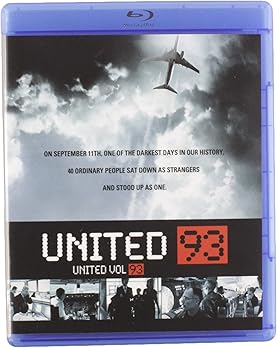
See ๐˜œ๐˜ฏ๐˜ช๐˜ต๐˜ฆ๐˜ฅ 93.

Kent’s Recommended Watch:
Paul Greengrass,
United 93

I use Gmail for lots of reasons, but mostly it’s for the ads. When I used Hotmail or Yahoo or iWon’s email service, I’d get all these obnoxious ads to refinance my mortgage rate or to meet sexy singles. The “meet sexy singles” ads have lately begun to border on pornography—one or two of these ads consist only of a pair of bikini-clad breasts. So much for a woman’s other attributes.

Gmail’s ads are nice and non-obnoxious, and I can actually customize them for things I’m actually interested in, like movies. I get ads for Rotten Tomatoes, a movie site which basically totals up all the movie reviewers on the internet and gives what percentage of them love or hate a movie. I hadn’t even heard of United 93 before this (I don’t watch much TV, so I never saw the TV spots) and suddenly there was an ad for it, plus the percentage of the reviewers who liked it. Coincidentally, 93 percent. But that’s an impressive percentage. So I read some of the reviews, and decided it might be worth $6.50.

United 93 is of course about one of the planes hijacked on 11 September 2001. It was headed for (we think) the Capitol, but before it got out of Pennsylvania airspace the passengers stormed the cabin and caused it to crash.

This is one of those movies which could have been done horribly wrong.

Remember Apollo 13? Now, try applying the screenwriting on that film to United 93. You’d have the sympathetic, heroic captain; the sympathetic, heroic head of the FAA, fighting the evil bureaucrats around him; the sympathetic, heroic military commanders, also fighting the evil bureaucrats around them; the wives and families at home, providing lots of pathos as they say good-bye to their loved ones; blah blah blah. Not only would it not work, it’d be offensive. The only way Ron Howard could get away with it is that nobody died.

Okay, now apply the screenwriting on Titanic. All the terrorist stuff is happening in the background, but what the movie’s really about is the growing romance between a plucky young proletarian from coach and an unhappy bourgeois first-class passenger. In the middle of the four-hour, $400M movie (even though the actual flight lasted maybe an hour), they meet, talk, dance, he does a nude sketch of her, they copulate in an automobile in the luggage compartment, run in slow-motion through the steam, and hold onto the edge of the plane as it plummets into Pennsylvania.

And then there’s Pearl Harbor. Again, mainly about a romance; then they go through the whole terrorist thing. Miraculously they survive, and tack on a happy ending where two of the passengers fly planes into the middle of Afghanistan and crash into their buildings in retaliation.

As you may notice, Hollywood doesn’t have the best track record with bringing historical disasters to the screen.

This one, however, was done right. The director, Paul Greengrass, decided to shoot it like a documentary—the sloppy-cinemetographer Steadicam™ jitteriness and all—and in real time as much as possible. No commentary; no over-dramatization (except there are, as usual, actors who overact); nothing other than what happened. (For the most part; you have to dramatize some things in order to keep the story moving). Many of the parts are even played by the actual people who did them.

There really wasn’t a better way that it could have been done, and I actually have no historical inaccuracies to gripe about, which is rare for me. It’s an intense movie, and it does not have a happy ending. But go see it. It’s excellent.

25 April 2006

Killing blogs.

I have lately been ridiculously busy, as was kind of inevitable now that I’m juggling two jobs. Even though I’ve got all these rants in my head, that’s where they’re likely going to stay because I am usually too busy to put ’em down. Which means at some point I am going to freaking explode on someone, so that’s not good.

My small groups blog for Sojourners Church wasn’t going anywhere, so I killed it. Part of that is because the small groups at the church aren’t going anywhere either. We have a slowly shrinking congregation, largely taken up by people who attend only because they feel obligated on Sunday morning to attend a church, and not because they actually want to fellowship with one another. I’m looking forward to the end of the semester because then all the Bethany students will clear out of there and we’ll finally see who’s really supporting the church.

My AudioRants blog was also going nowhere, because I haven’t made any podcasts in six months. So much for that. Like I said then, I usually got everything out of my system when I wrote it down, and repeating it for an audio blog became nothing more than a novelty.

Two fewer blogs. Life, simplified.

18 April 2006

Playing with Flash ads.

I used to rant against the stupid advertisements, made with Macromedia Flash™, that had you “catch the ball” or “shoot the terrorist” or “whack the mole” or do something successful with your mouse in order to win a free iPod or PSP or some other electronic tchotchke (after you respond to five offers and manage to get five others to do the same). They were ubiquitously obnoxious.

Now, I play ’em.

That’s right, I play them. As if they were video games. They’re not; they’re not that hard to win. But they’re mildly amusing, and it’s fun to whack the mole or catch the ball or shoot Tom Cruise (or the terrorist, depending on the ad). And when I’m successful, and the new website pops open, I simply close the new window and go back to whacking moles, catching balls, and shooting Tom Cruise. Because I’m not going to their bloody website.

We may as well get a little fun out of the crap the internet flings at us.

13 April 2006

Happy Maundy Thursday.

Or Holy Thursday, if you don’t know what “maundy” means (I didn’t); the day we remember when Jesus handed out matzoh and wine to his students and taught them to “do this to remember me.” The Catholics have more details.

I’ve read a few theories that say Jesus was crucified on Thursday rather than Friday; this way he could stay in his tomb for a literal three days, instead of part of Friday, all of Saturday, and the before-sunrise part of Sunday. But John 19.31 is quite clear Jesus died on Preparation, which is what the Jews called Friday (because on Preparation you prepare for Shabbat).

The proponents of a Thursday death of Jesus say it fits the calendar. Well, of course it does—if you have the wrong year. They claim Jesus died in 30 CE. Why? Because, again, they’re being over-literal. Jesus was “about thirty” when he first began to minister [Luke 3.23] and if you add up all the Passovers in John’s gospel (presuming John didn’t skip any) then Jesus ministered three years, which would make him about 33 when he died; and if Jesus was born in 4 BC, and there was no year 0, then dying at age 33 would make the year 30. Simple.

Except their calculations are wrong.

Following Luke’s description of the year, [Luke 2.1-2] Jesus was born in 7 BC. (If you have to be a stickler about him dying at age 33, this means he died in the year 27.) He was born before Herod’s death in 4 BC; during Quirinius’s second census, which had to take place before he was fired.

John began baptizing in the 15th year of Caesar Tiberius, which is the year 28. This would make Jesus 34 years old, or “about thirty,” as Luke put it. If Jesus was thirty, Luke would have said thirty. By age 33, Jesus was still fixing roofs and making wagons and tables. So much for his being 33 when he died.

That year 33 is traditionally the year in which Jesus died, and it lines up properly with the historical circumstances. This means Jesus died at age 39. (Which makes the mocking comment, “You’re not yet fifty” in John 8.57, slightly more reasonable.)

Why is the year 33 so important? Passover falls on Shabbat this year, just like it does in the year Jesus was crucified. It doesn’t in 30, or 27, or any other year you pick to make Jesus’s age 33.

Why is that particular age so important anyway? It’s not even mentioned in scripture. But people are awfully picky about their traditions. They’re so willing to chuck the older ones if they don’t match their favorite ones. (Some day I may rant about the too-common Protestant belief that Jesus was buried in the Garden Tomb rather than the tomb in the Church of the Holy Sepulcher—the only reason being that the Garden Tomb isn’t Catholic.)

And then of course, there’s ignoring Maundy Thursday but making sure to remember their Easter egg hunts… and if I recall right, Jesus also instituted the sacrament of foot-washing on the same day he instituted communion. When’s the last time your church had a foot-washing service? Ever? Remember the line, “If I, your Master and Rabbi, washed your feet, you ought to wash one another’s feet too; for I gave you an example, and you should do what I did to you.” [John 13.14-15]

More stuff to ponder as I get ready to visit my family in Vacaville for Good Friday. Hristo anesti.

07 April 2006

Dialogue about The Da Vinci Code.

Tuesday.

HE. “You actually read The Da Vinci Code?
ME. “I did. I wanted to see what the big deal was.”
HE. “So what did you think? Is it true?”
ME. “Is One Flew Over the Cuckoo’s Next true?”
HE. “No… That’s not what I meant. I know The Da Vinci Code’s fiction. I’m asking you if there’s any truth to the claims in the book.”
ME. “You want me to confirm, or deny, what you personally believe?”
HE. “I don’t think it’ll make any difference.”
ME. “Then there’s no point in telling you what I think.”
HE. “I just wanna know what you think.”
ME. “And then you’ll completely disregard it. Unless, for some reason, it’s the same opinion you have; then you’ll think I’m the smartest guy in the world.”
HE. “Would you just tell me…”
ME. “Fine. First of all, I honestly don’t know if Leonardo da Vinci was a gnostic. I haven’t yet read a biography of him. Maybe at some point I will.”
HE. “A gnostic?”
ME. “That’s the religion that believes Jesus was married and had kids.”
HE. “It’s an actual religion?”
ME. “It’s actually a whole bunch of religions. Kind of like when nowadays you want to make some money, so you start a New Age cult. You borrow a few ideas from the Buddha, borrow a few from Kong Fuzi and the Bhagavad-Gita, throw in some from Moses and Jesus and Muhammad, put some space aliens in there because it’s the modern era, hit frappรฉ, and sell your secret mystical discoveries for a healthy profit.”
HE. “I’m talking about The Da Vinci Code.
ME. “So’m I. Gnostics aren’t a new bunch. There have been gnostics since the beginning of time. The only difference between gnostics now and gnostics then are the space aliens. Space aliens are more ‘today.’”
HE. “What does this have to do…”
ME. “You take a religion that involves a lot of ritual sex, like the Baal or Aphrodite or Artemis or one of those nature religions. Then, in order to appeal to the people who recognize Jesus Christ is an actual historical figure, you mix him in there a little. But you don’t mix him in too much; he won’t approve of the ritual sex. So you change those parts of his teachings until it’s something you can live with. And when people ask you why you don’t worship him like normal Christians, claim it was the normal Christians who changed him. You worship him the way he’s supposed to be worshipped. With lots and lots of ritual sex. That's gnosticism.”
HE. “New Age religions don’t have ritual sex in them.”
ME. “Okay, neo-pagan religions. New Age religions are more often about self-denial. That’s just their way of appealing to a different demographic. But they also like to mix ’n match religions until they come up with something new, and then in order to sell it they claim that it’s something old.”
HE. “Like St. Paul does when he’s quoting the Old Testament in order to sell Christianity.”
ME. “Paul fully admitted Christianity was something new. But it was hinted at in the Old Testament. It was planned at the beginning of time. But Jesus wasn't born until 7 BC. So it certainly wasn’t old.”
HE. “Okay. Other than that, how do we know that Paul wasn’t one of these gnostics, trying to mix Jesus together with Judaism and come up with a new religion to sell?”
ME. “Christianity wasn’t Paul’s idea. He had to be converted to it. By force, as I recall.”
HE. “He claimed Jesus appeared to him.”
ME. “He had witnesses.”
HE. “They could’ve been faked.”
ME. “Are you willing to apply this degree of skepticism to The Da Vinci Code, or do you only have it for Christianity? You seem to be extremely accepting of a religion as depicted in a novel, as opposed to one that’s been real and really practiced for 20 centuries.”
HE. “I’m not saying I agree with The Da Vinci Code.
ME. “Ah, the easiest defense: stand for nothing.”
HE. “I’m just saying that this all happened so long ago, Jesus and all this, and there’s no way we can really know for sure what happened way back then.”
ME. “There's lots of ways. Fr’instance, did Octavian win the Battle of Actium?”
HE. “The what?”
ME. “Octavian Caesar. Antony and Cleopatra. They were fighting over the Roman Empire. Who won?”
HE. “Octavian.”
ME. “Are you sure?”
HE. “No. See? That's what I’m saying. It happened all that time ago…”
ME. “In the movie Gladiator, how did they say hello to Commodus? ‘Hail Caesar’ or ‘Hail Antony’?”
HE. “Caesar.”
ME. “The words ‘Kaiser’ and ‘Czar’ come from what Roman name, Caesar or Antony?”
HE. “Okay, I get the point.”
ME. “If Caesar didn’t win, he probably wouldn’t even have his own salad dressing.”
HE. “Okay, but how about Jesus and Mary [Magdalene] having kids? We don’t know whether that happened.”
ME. “Yes we do. There’s no historical record of Jesus having a wife and kids.”
HE. “That doesn’t mean he didn’t have them.”
ME. “How does it make Jesus any less God to have a wife and kids?”
HE. “What do you mean?”
ME. “In The Da Vinci Code, the argument is that the church tried to hide Jesus’s family because they wanted to say that Jesus is divine. This in a culture that worshipped Zeus, a god, who had a wife and kids, and it didn’t make him any less divine. And I don’t see how Jesus having a family would have anything to do with his divinity. He did have a mother and brothers, you remember. Marriage, Paul points out, isn’t sinful. Jesus could have been married and still been without sin.”
HE. “I suppose.”
ME. “So why would the church have any reason to cover that up?”
HE. “I don’t know.”
ME. “I don’t know either. The only reason they’d have for saying Jesus wasn’t married is that Jesus wasn’t married.”
HE. “Wait. The book says they covered it up because after Jesus died, the disciples seized power from Mary Magdalene and her kid and started the church.”
ME. “No. Jesus came back from the dead, took his power back, and started the church.”
HE. “That's the Catholic version.”
ME. “The Catholic version says that Jesus’s family was also involved in starting the church. After Jesus ascended into heaven, the disciples and Jesus’s mother and brothers gathered together to pray for 40 days. Jesus’s family was part of the church from the beginning. His brother James was bishop of Jerusalem.”
HE. “Jesus had brothers?”
ME. “At least four. And he had sisters. And I admit, the church has some problem recognizing they exist; there’s this doctrine that the Virgin Mary was a perpetual virgin, which Protestants don’t buy. They’re called ‘brothers’ and ‘sisters’ in the bible, and the only way that means ‘cousins’ is if you’re trying to explain away why your doctrine conflicts with scripture.”
HE. “So if he had brothers and sisters, maybe he had a wife.”
ME. “So if I have brothers and sisters, maybe I have a wife? That’s not logical.”
HE. “No; if the church can’t admit Jesus had siblings…”
ME. “Which is probably why people are so willing to believe this Da Vinci Code crap; because the Catholics can’t admit Jesus had siblings, and if they're willing to hide one thing, maybe they’re willing to hide other things. That’s the argument of every conspiracy theorist in the world. Proves nothing.”
HE. “You’re not willing to entertain the idea?”
ME. “Of course I entertained the idea; I read the bloody Da Vinci Code. I suspended disbelief long enough to read the novel. And then the novel was over and I returned to reality. And the reason there's still a stupid controversy over this novel is because thousands of readers are still suspending disbelief and asking themselves, ‘What if?’ What if? What if the Martians are going to land and invade Britain? What if a virus kills everybody and those that are left gather in Boulder and Las Vegas to have a showdown? What if a tornado sucks my Kansas farmhouse into the sky and drops me in the land of Oz? It’s only a freaking novel.
HE. “Then why are you getting so worked up about it?”
ME. “Because refuting a novel is a waste of my intellect. The fact that it’s fiction should make it self-refuting. It’s not real. Why are we talking about it as if it is?”
HE. “I don't know.”
ME.You don’t know? You asked me if I thought it was true!”
HE. “Is it?”
ME. “No.”
HE. “Okay.”
ME. “Plus, I hate apologetics.”
HE. “Whatever those are.”

06 April 2006

Shopping in Santa Cruz.

Out of coffee. Time to go shopping.

And for coffee I need to go to Trader Joe’s, which is one of the better grocery stores in the area. They have more of the odd, hard-to-find items that I like, but they don’t have the less-than-reasonable prices that you find at the yuppie grocery stores like Nugget or Scotts Valley Market. If I want cheese puffs without trans fats, I shouldn’t have to pay three bloody dollars for a seven-ounce bag. If I want a good dark-roast coffee blend, I shouldn’t have to pay $9 for 12 ounces. (The one gripe I have about Trader Joe’s is I shouldn’t have to spend an extra buck for decaf, but $11 for 24 ounces is still better than the $18 it’d cost me elsewhere.)

Trader Joe’s is in Santa Cruz proper. When people ask where I live, I usually say “Santa Cruz” because it takes a whole extra sentence to tell them that Scotts Valley is a yuppie-infested suburb of Santa Cruz; it’s just easier to say Santa Cruz. But there’s a huge difference between suburbs and cities. In a suburb, if you’re liquored up and walking down the street, the cops come by and hassle you. In a city, the cops are too busy handling domestic violence cases and drug busts, and the only people who hassle you are other drunks and the occasional overzealous rent-a-cop.

The lady at my bus stop was quite liquored up; the smell reminded me of Grandma Betty. (Someday I may write an entry about my homeless alcoholic grandmother, but not today.) She accosted me before I could even get to the stop: “Could you do me a favor?”

“Maybe,” I said, which is my usual response to requests for favors.

“They won't let me in the store,” she said, pointing to the downtown Long’s Drugs. “Could you get me six oatmeal cookies? No, wait—six oatmeal cookies and a brownie.” She handed me three thrashed dollar bills. “And you can keep the extra dollar.”

“Let me put my stuff away first,” I said. I was carrying two grocery bags, and I wanted to stash the groceries in my duffel bag before I got on the bus. I also had a roll of postal wrap that wasn’t gonna fit in the bag, and I always feel uncomfortable carrying open grocery bags into a store. When you do this, the rent-a-cops stare at you more often in case you’re planning to do a little shoplifting. But since I’m a white guy and my pants are pulled up properly, they usually let me slide.

I took the $3 and went into the store. The snacks she was talking about are the Little Debbie™ kind; the cheap crap that I used to buy before I realized their ingredients were going to give me my first heart attack before the age of 40. They were 25¢ each, and the brownie was 50¢. If she was hungry, she should have gone to Taco Bell, crappy as it is, and bought 99¢ burritos; they wouldn’t kill her as quickly as the Little Debbie™ junk and she'd have a full stomach. But if she was really concerned about her health, she wouldn’t be spending her food money on liquor.

“Snack time,” I said as I returned with her baggie of goodies. She thanked me and left.

“You're a good man,” commented the fellow who was waiting at the bus stop.

“Not as good as I could be,” I said, “but I try.”

“Well, that’s all you can do,” he said.

No, I thought. I could have done more. I could have—should have—put her extra dollar in the bag; she wouldn’t have found it until she was away, and I didn’t get her the junk food because I needed the dollar. I did it because she asked. It just didn’t occur to me how to slip the money back to her.

Next time, though. ’Cause there will be a next time.

05 April 2006

Baby photo.


[Click to embiggen.]

I’m an uncle again.

Notice how I started that with I’m an uncle again. Me me me. As if I had anything to do with this.

Anyway, my brother Chad and his wife Kelli now have a daughter, Faith Elizabeth Leslie, who was born this weekend. My dad emailed me the photo because he’s the only one in the family who takes photos anymore.

Kelli didn’t take any painkillers, which is pretty hardcore. My attitude is we have the drugs; let’s use ’em. But you know, there’s something to be said for natural childbirth. For the rest of your children's lives, you can hold that over their heads. Mom still does it with me. Seems I almost killed her. But that's probably just the way she tells it; I’m the one who still has the forceps scars.

…I’m supposedly announcing the birth, and I’m still going me me me me me. Well, it is my blog. If Faith ever reads this years from now, and doesn’t like it, she can get her own blog, and rant about her loony uncle Kent.

02 April 2006

“I know this is out of context, but...”

The phrase, “I know this is out of context, but…” is an interesting phrase you really only hear at bible colleges. Yes, sometimes you hear them outside of college, but rarely. But it’s really quite a unique saying. It essentially means:

After careful [or casual] research on this particular passage of scripture, I have come to the unavoidable conclusion it doesn’t mean what I want it to mean. I want it to have something to do with the point I’m about to make. This is because I want to appropriate some of God’s authority for this point. It’s a really good and valid point, but if I state it under my own authority, it’s all bullflop; but under God’s authority I can make you obey me, the great and holy Preacher Almighty. But it doesn’t actually mean that. So, as a caveat to the biblical scholars (and anyone else who might actually have turned their bible to this passage in order to verify what I’m saying) I will admit it doesn’t mean what I want it to, yet misuse it anyway. I know there are standards, but screw ’em. I have a message to preach, and I need to ram the point home with some scripture.

You might’ve heard the variations of this: “It doesn’t exactly mean that, but…” or “People have used this passage to mean…” or “Many have interpreted this passage this way…” or “The biblical principle behind this passage is…”

Oh yeah, you gotta love that phrase “biblical principle.” I’ve heard this so often it’s nauseating. You know what “biblical principles” are? Teachings of men that require extensive proof-texting before we can call them scripturally valid. It’s as if the bible were in secret code, and the very words aren’t as important as its hidden, mysterious “principle,” which you wouldn’t know about unless you had a wise, cabalistically-trained preacher to show you the way.

These phrases never really sunk in until I taught junior high. It was my first year, we were on a camping retreat with the students, a fellow teacher was slapping together his devotion for the evening (an hour before he had to present it; that’s another rant), and he asked me, “Where in the bible does it say, ‘Where there’s no vision, the people perish’? I’ m g onna talk about how the kids need to have a vision for their lives.”

“Somewhere in Proverbs,” I said. “Hang on, I’ll find it.”

He couldn’t find it because he had an NIV, which renders it, “Where there is no revelation, the people cast off restraint; but blessed is he who keeps the law.” That’s actually a decent translation. I had an NASB, which still used the word “vision.”) The word for “vision” is literally chazon, a revelatory vision. It refers to God’s revelation of himself through his law on Mt. Sinai; without it the people don’t know what to do. It is a parallel to the next line: “Blessed is he who keeps the law,” the law being the revelation of God. Ripping it from this context is a misuse of the scripture. I explained this to him.

“I was gonna use that verse,” he said.

“You’re gonna have to find a better one,” I said. “It doesn’t mean what you want it to.”

He used the verse anyway.

He read from his translation, then he said, “In the King James version, it reads, ‘Where there is no vision, the people perish,’ and that means…” and he proceeded to go along with his mini-speech about how the kids need to make plans and set goals for their lives, otherwise those lives would suck. It was a complete disregard for what the scripture—in his favorite translation!—said.

I confronted him later. “Yeah, the verse didn’t say that,” he admitted, “but I was actually preaching the biblical principle behind it, which is still good.”

Biblical principle, my pasty white heiney. He didn't have time to do his homework, and has no verses to prove this idea (valid as it may be) is an actual biblical concept, so he twists a scripture into saying it. What’re the kids gonna think if any of them actually study this verse?

’Cause you know some of them will. How often have you heard this testimony: “In summer camp, a speaker said something that really struck me,” followed by a verse? Now, how often have you heard them add, “But later I found out it didn’t mean that, and I realized every preacher I ever knew had lied to me, so I stopped going to church and now I’m agnostic”? I’ve heard that second thing much less often… but I have heard it. Too often.

The kids are either gonna think it’s okay to likewise twist scripture, or they’ll think the teacher was trying to deceive them. If we’re lucky, they’ll rightly deduce he was full of crap. If we’re lucky.

31 March 2006

“Outing” Joel Osteen.


Most of the bloggers out there exist only to rant about stuff they don’t like. How will adding Osteen to their lists change anything?

I don’t know if you know who Joel Osteen is. Possibly not. He’s the pastor of Lakewood Church, which produces a weekly TV show that features him. I first came across him a few years ago, when I was eating breakfast one Sunday and watching TV church. (I’d usually watch Charles Stanley, who isn’t bad theologically, although I’d like to hear him actually do a real exposition of a passage for once, and I wish he’d stop trying to sell Alaska cruises.) Anyway, Stanley was over with, and some other not-so-good preacher’s show was starting, so I flipped the channels and came across Osteen’s show.

I figured it was a church show because it is, after all, broadcast Sunday morning. It struck me as… kinda useless. More useless than many of the other TV church shows. He wasn’t going into detail about any passage of scripture. He wasn’t trying to make a profound theological point. He wasn’t foaming at the mouth about some bizarre End Times conspiracy or about how “the homosexuals have taken over Hollywood.” He was just blithering about how God wants us to have happy, prosperous lives. Then there was a commercial about how they were moving the church from the large, cavernous building they already occupied (which I at first thought was a rented auditorium) into an even bigger building (which I later discovered was the Compaq Center). So he’s got a big giant church. No wonder he has his own TV show.

I didn’t think much about him after that, until I found that Christian Book Distributors was selling a book of his, Your Best Life Now, in which he announces that God wants us to have happy, prosperous lives. Just look at Osteen: He has a happy, prosperous life. And if he has one, surely God wants everyone to have one, right?

’Cause if you don’t have a happy, prosperous life, there’s something wrong with you. Why, look at all those unhappy, financially unprosperous Christians in China that are too busy hiding from the government to buy themselves Lexuses and thousand-dollar suits. There must be something wrong with them. And those missionaries! What’s with them giving up comfort and financial stability for God? Surely he would rather they stay home, living in air-conditioned comfort and eating bon bons; by that example people will just flock to Jesus.

…Okay, I really gotta cut back on the sarcasm.

29 March 2006

Midterm elections #4: Pressure on the pastors.

Why do Christians keep falling for the claims that politicians will help us?

I’m looking forward to reading Gregory Boyd’s The Myth of a Christian Nation, in which he discusses separating church and state in the pulpit. (You can read an excerpt of it here.)

There are unfortunately many who see the evangelical church as another wing of the Republican Party—both in the party and in the church—and it strikes me as nuts that the church which claims to follow Jesus, seems to have paid no attention to Jesus’s rejection of political power. Didn’t they read this?

Taking [Jesus] up
and showing him all the kingdoms on Earth
in an instant of time
the devil said to him:
“I will give you all this power
and all their honor
for it was given over to me
and to whomever I want to give it to.
If you prostrate yourself to me,
everything is yours.”
Answering, Jesus said, “It’s written:
‘You will prostrate yourself to the Lord God,
and him alone will you worship.” [Lk 4.5-8]

But you’ll notice how often everything is thrown away in the pursuit of political power; how it all too frequently becomes a god to those who chase after it, and how like so many idols there is a devil behind it, accepting the worship.

Because it’s power. Political power is simply human power, seized from God in the very same way that the devil tries to seize power from God, from us, and from anyone who gets in its way.

And if the church goes along with it, the church will get political power. Remember the Moral Majority? What did the Christian Right do once it was given political power in the early ’80s? That’s right; it squandered it. What did it do again once it was given political power in the mid ’90s? Squandered it again. The Christian Right constantly is told, and tells its members, “Elect us and we’ll fix all the moral problems in the country.”

Now we have a president and a Congress that claim the Christian Right as their constituency. How’re they doing? Well, they haven’t done jack squat about the moral problems; seems they’ve invested all their time into this excuse for their re-election: “These things take time. I’ll need another term to do it in. Don’t vote for the other guy, okay? I really do believe in all the things you do. I can prove it if you give me another term.” It’s like a wife-beater begging to be taken back; and the American people, particularly the Christian Right, are the suckers with low self-esteem who do it.

More ranting later.

28 March 2006

Amusing Comic Strip: “Are we even cavemen?”


B.C. parody. B.C. by Johnny Hart.

Johnny Hart didn’t actually draw this.

B.C. has got to be one of the most useless comic strips I’ve ever seen. It was a lot funnier before Johnny Hart became a Christian and felt the need to Christianize a strip which is after all about people who, as suggested by the strip’s title, live before Christ.

Every Easter strip has to be a message about how Jesus is risen (despite not yet being born), and every Christmas strip has to be about Jesus being born. Yet the strip’s events precede the Exodus, the nation of Israel, and the Roman Empire. It’s primarily about a bunch of guys in black shorts with one suspender apiece, assorted talking animals (including dinosaurs and a race of super-intelligent ants), and a proto-human caveman who is apparently a ball of fur with a mouth and feet. It’s always been that. The only things that changed after Hart became a Christian is there are less inventing-the-wheel type jokes, which he ran out of.

Instead, the strip contains lame puns, recycled one-liners, and occasional anti-idolatry or anti-evolution jabs that often don’t even make sense. (Being anti-evolution, in spite of his proto-human caveman character, never did make sense.) And the women in the strip have the rather less-than-Christian names of “the fat broad” and “the cute chick.” Hart’s Christianity is displayed on his sleeve, but you can’t find it otherwise in his strip.

Why, then, does this strip run at all in newspapers? Because American Christians like the fact that Hart displays his Christianity on his sleeve. They like a Christianity that’s all talk and no inward change. It resembles theirs.

So Hart’s strip will stay in newspapers until he dies, and if you’re a fan of irony it will be ever so amusing when the syndicate hands off his strip to a pro-evolution non-Christian who starts telling caveman jokes again and infuriates B.C.’s fan base.

Update, 12/13/2024: Hart died in 2007, and his grandson Mason Mastroianni produces the strip now, with the help of his brother and mom. It’s still kinda Christian, ’cause the Mastroiannis are Christian, but way less preachy. It’s even, occasionally, funny. And the women were finally given proper names; “Fat Broad” became Jane, and “Cute Chick” became Grace.

26 March 2006

Why we don’t want Bethany students at our church.


Actually, we do want Bethany students… but we’ll pass if you fit this description.

And let me preface this by saying this stuff is generally true of Bethany University students, and college students at most Christian schools. If you’re an exception, ignore this. Otherwise, here’s why we don’t want you.

  1. You’re too flaky. Part of the point behind college is that you’re figuring out what to do with your life. And you should. You should avoid commitments until you’ve had lots of time to figure out if you really want to do this with your life. But you don’t know how to take the necessary time you need to figure stuff out. You just commit. Then you discover it wasn’t the right decision, and bail—often after doing the same dumb thing as before, and committing yourself to something else you hadn’t thought through. You need to slow your decision-making process down; and we need to stop accepting your commitments as if they were rational decisions.
  2. Your real commitments are elsewhere. But honestly, you aren’t in the Santa Cruz area because you’re looking for a home church. Few people, other than professional clergy, choose to live someplace because of a church. You’re here because of college. College will take priority. You say God is your priority, but really it isn’t. Until you recognize this, you’re an idolater, and the church has enough idolaters.
  3. You confuse your education with anointing. (I especially recognize this because I’ve been guilty of this.) Just because you’re a college student—and the others aren’t, and they don’t know the newest and latest and greatest things in academia—you cop this attitude of, “I know how things should go, and you don’t” or “I still have my ideals intact, and you sold out years ago” and crap like that. This is particularly found among bible majors (like I was) and typical of people whose ideals take precedence over people, like college students.
  4. You confuse your adulthood with authority. Now that you’re old enough to vote, you often assume that you’re mature enough to take charge of things. You want to lead the youth ministry, or the food ministry, or an outreach, or a class. And you shouldn’t. The church model of leadership is servanthood. You need to shut up and wait for authority to be given to you instead of seeking it out. But often college students don’t want to wait for that to happen; they have rรฉsumรฉs to compile.
  5. You already have a home church. And it isn’t ours. So, when Easter and Christmas and the other important times come along, you’re never there. When Christmas break and spring break and summer break come along, you’re never there. Once you graduate, you’re gone. We can’t make any significant or long-term plans that include you. God help us if we put you into a position of leadership. It’s great for your rรฉsumรฉ, but the ministry often becomes a shipwreck once you leave; instead of seeking a capable successor, you were more interested in going out with a bang.
  6. You don’t tithe. Your money goes to your home church. Those of you that can tithe don’t understand how tithing works, so you keep your money because you “can’t afford to tithe,” or give a fraction of it. It’s not that we need your money, ’cause it honestly isn’t enough to pay the bills; it’s that your tithe represents your real commitment to the church, and it isn’t there. (Same with the licensed Assemblies ministers who give all their money to the district instead of the church. Where your money goes, so goes your heart. If you cared, you’d go get a waiver from the district so you could contribute to your church, but you don’t; so it’s not really your church, no matter what your rรฉsumรฉ says.)
  7. You don’t give time to the church. College is not a 24-hour vocation, but you treat it like one with the after-classes social events, the afternoon naps taken so that you can stay up until 2 a.m., and all the other artificial functions that mean you “don’t have time” for midweek church functions. You can make time for movie night with your buds, but you always have homework to do during Wednesday night prayer. And when midterms, finals, and major socials roll around, you’re gone.
  8. You think your spiritual needs are already met with morning and evening chapels, dorm devotionals, the occasional bible class in your general ed package, and your extracurricular ministries. I’ve often heard it said that you don’t need to go to church because the school is the church. That’s bull-flop. The school resembles a church, because it’s full of Christians; but can you go evangelize new converts, take them to the school, and get them baptized and discipled? Not unless you pay tuition. The fellowship in the school is entirely dependent on whether you’ve paid tuition, not whether you have a relationship with Jesus. It’s based on Mammon, not Christ.
  9. You’re a bunch of gossips. When you meet outside of church, the conversations always turn to, “The pastor should do this,” or “The leadership doesn’t know what it’s doing,” or “The sermon sucked.” The pastor is criticized for being too human and making normal human mistakes; the church is criticized for not having things exactly the way you like them; but you’re too “busy” to step up and fix things. You never say any of this stuff to the face of the person who needs to hear it. Instead of offering help, you spend most of your time bitching. Shut up.
  10. You’re a bunch of spectators. To this point, I’ve talked a lot about the people who do contribute time to the church; but the bulk of you contribute nothing to the church, because you’re only there Sunday mornings, and that’s all. The rest of the week, we don’t see you, we don’t know you, you speak nothing into our lives, and you’re only there because you like the worship or the preaching. You take and don’t minister. You’re parasites, just like 80 percent of the church as a whole, whose faith has no works and is dead.
  11. Your presence deceives the leadership of the church into thinking, “Hey, look at all the people we have. We must be doing something right!” And so we don’t do anything. We wind up putting all our time and effort into busywork, ministering to people who won’t change, won’t grow, won’t contribute, won’t learn, and will render us impotent, weak, and distracted. Just like the devil wanted.

So depart from us, you who work iniquity. Come back if you grow up.