30 April 2006

See 𝘜𝘯π˜ͺ𝘡𝘦π˜₯ 93.

Kent’s Recommended Watch:
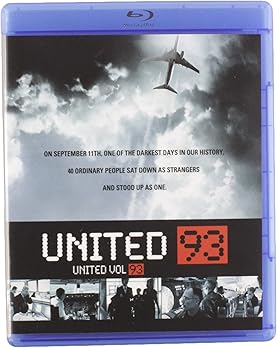
Paul Greengrass,
United 93

I use Gmail for lots of reasons, but mostly it’s for the ads. When I used Hotmail or Yahoo or iWon’s email service, I’d get all these obnoxious ads to refinance my mortgage rate or to meet sexy singles. The “meet sexy singles” ads have lately begun to border on pornography—one or two of these ads consist only of a pair of bikini-clad breasts. So much for a woman’s other attributes.

Gmail’s ads are nice and non-obnoxious, and I can actually customize them for things I’m actually interested in, like movies. I get ads for Rotten Tomatoes, a movie site which basically totals up all the movie reviewers on the internet and gives what percentage of them love or hate a movie. I hadn’t even heard of United 93 before this (I don’t watch much TV, so I never saw the TV spots) and suddenly there was an ad for it, plus the percentage of the reviewers who liked it. Coincidentally, 93 percent. But that’s an impressive percentage. So I read some of the reviews, and decided it might be worth $6.50.

United 93 is of course about one of the planes hijacked on 11 September 2001. It was headed for (we think) the Capitol, but before it got out of Pennsylvania airspace the passengers stormed the cabin and caused it to crash.

This is one of those movies which could have been done horribly wrong.

Remember Apollo 13? Now, try applying the screenwriting on that film to United 93. You’d have the sympathetic, heroic captain; the sympathetic, heroic head of the FAA, fighting the evil bureaucrats around him; the sympathetic, heroic military commanders, also fighting the evil bureaucrats around them; the wives and families at home, providing lots of pathos as they say good-bye to their loved ones; blah blah blah. Not only would it not work, it’d be offensive. The only way Ron Howard could get away with it is that nobody died.

Okay, now apply the screenwriting on Titanic. All the terrorist stuff is happening in the background, but what the movie’s really about is the growing romance between a plucky young proletarian from coach and an unhappy bourgeois first-class passenger. In the middle of the four-hour, $400M movie (even though the actual flight lasted maybe an hour), they meet, talk, dance, he does a nude sketch of her, they copulate in an automobile in the luggage compartment, run in slow-motion through the steam, and hold onto the edge of the plane as it plummets into Pennsylvania.

And then there’s Pearl Harbor. Again, mainly about a romance; then they go through the whole terrorist thing. Miraculously they survive, and tack on a happy ending where two of the passengers fly planes into the middle of Afghanistan and crash into their buildings in retaliation.

As you may notice, Hollywood doesn’t have the best track record with bringing historical disasters to the screen.

This one, however, was done right. The director, Paul Greengrass, decided to shoot it like a documentary—the sloppy-cinemetographer Steadicam™ jitteriness and all—and in real time as much as possible. No commentary; no over-dramatization (except there are, as usual, actors who overact); nothing other than what happened. (For the most part; you have to dramatize some things in order to keep the story moving). Many of the parts are even played by the actual people who did them.

There really wasn’t a better way that it could have been done, and I actually have no historical inaccuracies to gripe about, which is rare for me. It’s an intense movie, and it does not have a happy ending. But go see it. It’s excellent.

25 April 2006

Killing blogs.

I have lately been ridiculously busy, as was kind of inevitable now that I’m juggling two jobs. Even though I’ve got all these rants in my head, that’s where they’re likely going to stay because I am usually too busy to put ’em down. Which means at some point I am going to freaking explode on someone, so that’s not good.

My small groups blog for Sojourners Church wasn’t going anywhere, so I killed it. Part of that is because the small groups at the church aren’t going anywhere either. We have a slowly shrinking congregation, largely taken up by people who attend only because they feel obligated on Sunday morning to attend a church, and not because they actually want to fellowship with one another. I’m looking forward to the end of the semester because then all the Bethany students will clear out of there and we’ll finally see who’s really supporting the church.

My AudioRants blog was also going nowhere, because I haven’t made any podcasts in six months. So much for that. Like I said then, I usually got everything out of my system when I wrote it down, and repeating it for an audio blog became nothing more than a novelty.

Two fewer blogs. Life, simplified.

18 April 2006

Playing with Flash ads.

I used to rant against the stupid advertisements, made with Macromedia Flash™, that had you “catch the ball” or “shoot the terrorist” or “whack the mole” or do something successful with your mouse in order to win a free iPod or PSP or some other electronic tchotchke (after you respond to five offers and manage to get five others to do the same). They were ubiquitously obnoxious.

Now, I play ’em.

That’s right, I play them. As if they were video games. They’re not; they’re not that hard to win. But they’re mildly amusing, and it’s fun to whack the mole or catch the ball or shoot Tom Cruise (or the terrorist, depending on the ad). And when I’m successful, and the new website pops open, I simply close the new window and go back to whacking moles, catching balls, and shooting Tom Cruise. Because I’m not going to their bloody website.

We may as well get a little fun out of the crap the internet flings at us.

13 April 2006

Happy Maundy Thursday.

Or Holy Thursday, if you don’t know what “maundy” means (I didn’t); the day we remember when Jesus handed out matzoh and wine to his students and taught them to “do this to remember me.” The Catholics have more details.

I’ve read a few theories that say Jesus was crucified on Thursday rather than Friday; this way he could stay in his tomb for a literal three days, instead of part of Friday, all of Saturday, and the before-sunrise part of Sunday. But John 19.31 is quite clear Jesus died on Preparation, which is what the Jews called Friday (because on Preparation you prepare for Shabbat).

The proponents of a Thursday death of Jesus say it fits the calendar. Well, of course it does—if you have the wrong year. They claim Jesus died in 30 CE. Why? Because, again, they’re being over-literal. Jesus was “about thirty” when he first began to minister [Luke 3.23] and if you add up all the Passovers in John’s gospel (presuming John didn’t skip any) then Jesus ministered three years, which would make him about 33 when he died; and if Jesus was born in 4 BC, and there was no year 0, then dying at age 33 would make the year 30. Simple.

Except their calculations are wrong.

Following Luke’s description of the year, [Luke 2.1-2] Jesus was born in 7 BC. (If you have to be a stickler about him dying at age 33, this means he died in the year 27.) He was born before Herod’s death in 4 BC; during Quirinius’s second census, which had to take place before he was fired.

John began baptizing in the 15th year of Caesar Tiberius, which is the year 28. This would make Jesus 34 years old, or “about thirty,” as Luke put it. If Jesus was thirty, Luke would have said thirty. By age 33, Jesus was still fixing roofs and making wagons and tables. So much for his being 33 when he died.

That year 33 is traditionally the year in which Jesus died, and it lines up properly with the historical circumstances. This means Jesus died at age 39. (Which makes the mocking comment, “You’re not yet fifty” in John 8.57, slightly more reasonable.)

Why is the year 33 so important? Passover falls on Shabbat this year, just like it does in the year Jesus was crucified. It doesn’t in 30, or 27, or any other year you pick to make Jesus’s age 33.

Why is that particular age so important anyway? It’s not even mentioned in scripture. But people are awfully picky about their traditions. They’re so willing to chuck the older ones if they don’t match their favorite ones. (Some day I may rant about the too-common Protestant belief that Jesus was buried in the Garden Tomb rather than the tomb in the Church of the Holy Sepulcher—the only reason being that the Garden Tomb isn’t Catholic.)

And then of course, there’s ignoring Maundy Thursday but making sure to remember their Easter egg hunts… and if I recall right, Jesus also instituted the sacrament of foot-washing on the same day he instituted communion. When’s the last time your church had a foot-washing service? Ever? Remember the line, “If I, your Master and Rabbi, washed your feet, you ought to wash one another’s feet too; for I gave you an example, and you should do what I did to you.” [John 13.14-15]

More stuff to ponder as I get ready to visit my family in Vacaville for Good Friday. Hristo anesti.

07 April 2006

Dialogue about The Da Vinci Code.

Tuesday.

HE. “You actually read The Da Vinci Code?
ME. “I did. I wanted to see what the big deal was.”
HE. “So what did you think? Is it true?”
ME. “Is One Flew Over the Cuckoo’s Next true?”
HE. “No… That’s not what I meant. I know The Da Vinci Code’s fiction. I’m asking you if there’s any truth to the claims in the book.”
ME. “You want me to confirm, or deny, what you personally believe?”
HE. “I don’t think it’ll make any difference.”
ME. “Then there’s no point in telling you what I think.”
HE. “I just wanna know what you think.”
ME. “And then you’ll completely disregard it. Unless, for some reason, it’s the same opinion you have; then you’ll think I’m the smartest guy in the world.”
HE. “Would you just tell me…”
ME. “Fine. First of all, I honestly don’t know if Leonardo da Vinci was a gnostic. I haven’t yet read a biography of him. Maybe at some point I will.”
HE. “A gnostic?”
ME. “That’s the religion that believes Jesus was married and had kids.”
HE. “It’s an actual religion?”
ME. “It’s actually a whole bunch of religions. Kind of like when nowadays you want to make some money, so you start a New Age cult. You borrow a few ideas from the Buddha, borrow a few from Kong Fuzi and the Bhagavad-Gita, throw in some from Moses and Jesus and Muhammad, put some space aliens in there because it’s the modern era, hit frappΓ©, and sell your secret mystical discoveries for a healthy profit.”
HE. “I’m talking about The Da Vinci Code.
ME. “So’m I. Gnostics aren’t a new bunch. There have been gnostics since the beginning of time. The only difference between gnostics now and gnostics then are the space aliens. Space aliens are more ‘today.’”
HE. “What does this have to do…”
ME. “You take a religion that involves a lot of ritual sex, like the Baal or Aphrodite or Artemis or one of those nature religions. Then, in order to appeal to the people who recognize Jesus Christ is an actual historical figure, you mix him in there a little. But you don’t mix him in too much; he won’t approve of the ritual sex. So you change those parts of his teachings until it’s something you can live with. And when people ask you why you don’t worship him like normal Christians, claim it was the normal Christians who changed him. You worship him the way he’s supposed to be worshipped. With lots and lots of ritual sex. That's gnosticism.”
HE. “New Age religions don’t have ritual sex in them.”
ME. “Okay, neo-pagan religions. New Age religions are more often about self-denial. That’s just their way of appealing to a different demographic. But they also like to mix ’n match religions until they come up with something new, and then in order to sell it they claim that it’s something old.”
HE. “Like St. Paul does when he’s quoting the Old Testament in order to sell Christianity.”
ME. “Paul fully admitted Christianity was something new. But it was hinted at in the Old Testament. It was planned at the beginning of time. But Jesus wasn't born until 7 BC. So it certainly wasn’t old.”
HE. “Okay. Other than that, how do we know that Paul wasn’t one of these gnostics, trying to mix Jesus together with Judaism and come up with a new religion to sell?”
ME. “Christianity wasn’t Paul’s idea. He had to be converted to it. By force, as I recall.”
HE. “He claimed Jesus appeared to him.”
ME. “He had witnesses.”
HE. “They could’ve been faked.”
ME. “Are you willing to apply this degree of skepticism to The Da Vinci Code, or do you only have it for Christianity? You seem to be extremely accepting of a religion as depicted in a novel, as opposed to one that’s been real and really practiced for 20 centuries.”
HE. “I’m not saying I agree with The Da Vinci Code.
ME. “Ah, the easiest defense: stand for nothing.”
HE. “I’m just saying that this all happened so long ago, Jesus and all this, and there’s no way we can really know for sure what happened way back then.”
ME. “There's lots of ways. Fr’instance, did Octavian win the Battle of Actium?”
HE. “The what?”
ME. “Octavian Caesar. Antony and Cleopatra. They were fighting over the Roman Empire. Who won?”
HE. “Octavian.”
ME. “Are you sure?”
HE. “No. See? That's what I’m saying. It happened all that time ago…”
ME. “In the movie Gladiator, how did they say hello to Commodus? ‘Hail Caesar’ or ‘Hail Antony’?”
HE. “Caesar.”
ME. “The words ‘Kaiser’ and ‘Czar’ come from what Roman name, Caesar or Antony?”
HE. “Okay, I get the point.”
ME. “If Caesar didn’t win, he probably wouldn’t even have his own salad dressing.”
HE. “Okay, but how about Jesus and Mary [Magdalene] having kids? We don’t know whether that happened.”
ME. “Yes we do. There’s no historical record of Jesus having a wife and kids.”
HE. “That doesn’t mean he didn’t have them.”
ME. “How does it make Jesus any less God to have a wife and kids?”
HE. “What do you mean?”
ME. “In The Da Vinci Code, the argument is that the church tried to hide Jesus’s family because they wanted to say that Jesus is divine. This in a culture that worshipped Zeus, a god, who had a wife and kids, and it didn’t make him any less divine. And I don’t see how Jesus having a family would have anything to do with his divinity. He did have a mother and brothers, you remember. Marriage, Paul points out, isn’t sinful. Jesus could have been married and still been without sin.”
HE. “I suppose.”
ME. “So why would the church have any reason to cover that up?”
HE. “I don’t know.”
ME. “I don’t know either. The only reason they’d have for saying Jesus wasn’t married is that Jesus wasn’t married.”
HE. “Wait. The book says they covered it up because after Jesus died, the disciples seized power from Mary Magdalene and her kid and started the church.”
ME. “No. Jesus came back from the dead, took his power back, and started the church.”
HE. “That's the Catholic version.”
ME. “The Catholic version says that Jesus’s family was also involved in starting the church. After Jesus ascended into heaven, the disciples and Jesus’s mother and brothers gathered together to pray for 40 days. Jesus’s family was part of the church from the beginning. His brother James was bishop of Jerusalem.”
HE. “Jesus had brothers?”
ME. “At least four. And he had sisters. And I admit, the church has some problem recognizing they exist; there’s this doctrine that the Virgin Mary was a perpetual virgin, which Protestants don’t buy. They’re called ‘brothers’ and ‘sisters’ in the bible, and the only way that means ‘cousins’ is if you’re trying to explain away why your doctrine conflicts with scripture.”
HE. “So if he had brothers and sisters, maybe he had a wife.”
ME. “So if I have brothers and sisters, maybe I have a wife? That’s not logical.”
HE. “No; if the church can’t admit Jesus had siblings…”
ME. “Which is probably why people are so willing to believe this Da Vinci Code crap; because the Catholics can’t admit Jesus had siblings, and if they're willing to hide one thing, maybe they’re willing to hide other things. That’s the argument of every conspiracy theorist in the world. Proves nothing.”
HE. “You’re not willing to entertain the idea?”
ME. “Of course I entertained the idea; I read the bloody Da Vinci Code. I suspended disbelief long enough to read the novel. And then the novel was over and I returned to reality. And the reason there's still a stupid controversy over this novel is because thousands of readers are still suspending disbelief and asking themselves, ‘What if?’ What if? What if the Martians are going to land and invade Britain? What if a virus kills everybody and those that are left gather in Boulder and Las Vegas to have a showdown? What if a tornado sucks my Kansas farmhouse into the sky and drops me in the land of Oz? It’s only a freaking novel.
HE. “Then why are you getting so worked up about it?”
ME. “Because refuting a novel is a waste of my intellect. The fact that it’s fiction should make it self-refuting. It’s not real. Why are we talking about it as if it is?”
HE. “I don't know.”
ME.You don’t know? You asked me if I thought it was true!”
HE. “Is it?”
ME. “No.”
HE. “Okay.”
ME. “Plus, I hate apologetics.”
HE. “Whatever those are.”

06 April 2006

Shopping in Santa Cruz.

Out of coffee. Time to go shopping.

And for coffee I need to go to Trader Joe’s, which is one of the better grocery stores in the area. They have more of the odd, hard-to-find items that I like, but they don’t have the less-than-reasonable prices that you find at the yuppie grocery stores like Nugget or Scotts Valley Market. If I want cheese puffs without trans fats, I shouldn’t have to pay three bloody dollars for a seven-ounce bag. If I want a good dark-roast coffee blend, I shouldn’t have to pay $9 for 12 ounces. (The one gripe I have about Trader Joe’s is I shouldn’t have to spend an extra buck for decaf, but $11 for 24 ounces is still better than the $18 it’d cost me elsewhere.)

Trader Joe’s is in Santa Cruz proper. When people ask where I live, I usually say “Santa Cruz” because it takes a whole extra sentence to tell them that Scotts Valley is a yuppie-infested suburb of Santa Cruz; it’s just easier to say Santa Cruz. But there’s a huge difference between suburbs and cities. In a suburb, if you’re liquored up and walking down the street, the cops come by and hassle you. In a city, the cops are too busy handling domestic violence cases and drug busts, and the only people who hassle you are other drunks and the occasional overzealous rent-a-cop.

The lady at my bus stop was quite liquored up; the smell reminded me of Grandma Betty. (Someday I may write an entry about my homeless alcoholic grandmother, but not today.) She accosted me before I could even get to the stop: “Could you do me a favor?”

“Maybe,” I said, which is my usual response to requests for favors.

“They won't let me in the store,” she said, pointing to the downtown Long’s Drugs. “Could you get me six oatmeal cookies? No, wait—six oatmeal cookies and a brownie.” She handed me three thrashed dollar bills. “And you can keep the extra dollar.”

“Let me put my stuff away first,” I said. I was carrying two grocery bags, and I wanted to stash the groceries in my duffel bag before I got on the bus. I also had a roll of postal wrap that wasn’t gonna fit in the bag, and I always feel uncomfortable carrying open grocery bags into a store. When you do this, the rent-a-cops stare at you more often in case you’re planning to do a little shoplifting. But since I’m a white guy and my pants are pulled up properly, they usually let me slide.

I took the $3 and went into the store. The snacks she was talking about are the Little Debbie™ kind; the cheap crap that I used to buy before I realized their ingredients were going to give me my first heart attack before the age of 40. They were 25¢ each, and the brownie was 50¢. If she was hungry, she should have gone to Taco Bell, crappy as it is, and bought 99¢ burritos; they wouldn’t kill her as quickly as the Little Debbie™ junk and she'd have a full stomach. But if she was really concerned about her health, she wouldn’t be spending her food money on liquor.

“Snack time,” I said as I returned with her baggie of goodies. She thanked me and left.

“You're a good man,” commented the fellow who was waiting at the bus stop.

“Not as good as I could be,” I said, “but I try.”

“Well, that’s all you can do,” he said.

No, I thought. I could have done more. I could have—should have—put her extra dollar in the bag; she wouldn’t have found it until she was away, and I didn’t get her the junk food because I needed the dollar. I did it because she asked. It just didn’t occur to me how to slip the money back to her.

Next time, though. ’Cause there will be a next time.

05 April 2006

Baby photo.


[Click to embiggen.]

I’m an uncle again.

Notice how I started that with I’m an uncle again. Me me me. As if I had anything to do with this.

Anyway, my brother Chad and his wife Kelli now have a daughter, Faith Elizabeth Leslie, who was born this weekend. My dad emailed me the photo because he’s the only one in the family who takes photos anymore.

Kelli didn’t take any painkillers, which is pretty hardcore. My attitude is we have the drugs; let’s use ’em. But you know, there’s something to be said for natural childbirth. For the rest of your children's lives, you can hold that over their heads. Mom still does it with me. Seems I almost killed her. But that's probably just the way she tells it; I’m the one who still has the forceps scars.

…I’m supposedly announcing the birth, and I’m still going me me me me me. Well, it is my blog. If Faith ever reads this years from now, and doesn’t like it, she can get her own blog, and rant about her loony uncle Kent.

02 April 2006

“I know this is out of context, but...”

The phrase, “I know this is out of context, but…” is an interesting phrase you really only hear at bible colleges. Yes, sometimes you hear them outside of college, but rarely. But it’s really quite a unique saying. It essentially means:

After careful [or casual] research on this particular passage of scripture, I have come to the unavoidable conclusion it doesn’t mean what I want it to mean. I want it to have something to do with the point I’m about to make. This is because I want to appropriate some of God’s authority for this point. It’s a really good and valid point, but if I state it under my own authority, it’s all bullflop; but under God’s authority I can make you obey me, the great and holy Preacher Almighty. But it doesn’t actually mean that. So, as a caveat to the biblical scholars (and anyone else who might actually have turned their bible to this passage in order to verify what I’m saying) I will admit it doesn’t mean what I want it to, yet misuse it anyway. I know there are standards, but screw ’em. I have a message to preach, and I need to ram the point home with some scripture.

You might’ve heard the variations of this: “It doesn’t exactly mean that, but…” or “People have used this passage to mean…” or “Many have interpreted this passage this way…” or “The biblical principle behind this passage is…”

Oh yeah, you gotta love that phrase “biblical principle.” I’ve heard this so often it’s nauseating. You know what “biblical principles” are? Teachings of men that require extensive proof-texting before we can call them scripturally valid. It’s as if the bible were in secret code, and the very words aren’t as important as its hidden, mysterious “principle,” which you wouldn’t know about unless you had a wise, cabalistically-trained preacher to show you the way.

These phrases never really sunk in until I taught junior high. It was my first year, we were on a camping retreat with the students, a fellow teacher was slapping together his devotion for the evening (an hour before he had to present it; that’s another rant), and he asked me, “Where in the bible does it say, ‘Where there’s no vision, the people perish’? I’ m g onna talk about how the kids need to have a vision for their lives.”

“Somewhere in Proverbs,” I said. “Hang on, I’ll find it.”

He couldn’t find it because he had an NIV, which renders it, “Where there is no revelation, the people cast off restraint; but blessed is he who keeps the law.” That’s actually a decent translation. I had an NASB, which still used the word “vision.”) The word for “vision” is literally chazon, a revelatory vision. It refers to God’s revelation of himself through his law on Mt. Sinai; without it the people don’t know what to do. It is a parallel to the next line: “Blessed is he who keeps the law,” the law being the revelation of God. Ripping it from this context is a misuse of the scripture. I explained this to him.

“I was gonna use that verse,” he said.

“You’re gonna have to find a better one,” I said. “It doesn’t mean what you want it to.”

He used the verse anyway.

He read from his translation, then he said, “In the King James version, it reads, ‘Where there is no vision, the people perish,’ and that means…” and he proceeded to go along with his mini-speech about how the kids need to make plans and set goals for their lives, otherwise those lives would suck. It was a complete disregard for what the scripture—in his favorite translation!—said.

I confronted him later. “Yeah, the verse didn’t say that,” he admitted, “but I was actually preaching the biblical principle behind it, which is still good.”

Biblical principle, my pasty white heiney. He didn't have time to do his homework, and has no verses to prove this idea (valid as it may be) is an actual biblical concept, so he twists a scripture into saying it. What’re the kids gonna think if any of them actually study this verse?

’Cause you know some of them will. How often have you heard this testimony: “In summer camp, a speaker said something that really struck me,” followed by a verse? Now, how often have you heard them add, “But later I found out it didn’t mean that, and I realized every preacher I ever knew had lied to me, so I stopped going to church and now I’m agnostic”? I’ve heard that second thing much less often… but I have heard it. Too often.

The kids are either gonna think it’s okay to likewise twist scripture, or they’ll think the teacher was trying to deceive them. If we’re lucky, they’ll rightly deduce he was full of crap. If we’re lucky.