Showing posts with label #Recommendations. Show all posts

25 May 2006

๐˜Œ๐˜ฏ๐˜ณ๐˜ฐ๐˜ฏ: ๐˜›๐˜ฉ๐˜ฆ ๐˜š๐˜ฎ๐˜ข๐˜ณ๐˜ต๐˜ฆ๐˜ด๐˜ต ๐˜Ž๐˜ถ๐˜บ๐˜ด ๐˜ช๐˜ฏ ๐˜ต๐˜ฉ๐˜ฆ ๐˜™๐˜ฐ๐˜ฐ๐˜ฎ.

Kent’s Recommended Watch:
Alex Gibney:
Enron: The Smartest Guys in the Room

Enron executives Kenneth Lay and Jeffrey Skilling were convicted today of fraud and conspiracy in their attempts to hide Enron’s losses from investors. Read the FoxNews article.

Coincidentally, I finally got this documentary, Enron: The Smartest Guys in the Room from Blockbuster, after waiting six weeks to see it. I watched it Tuesday. It’s pretty fascinating; it’s another cautionary tale of good old fashioned greed taking over good old fashioned capitalism.

The folks who ran Enron really just wanted to make lots of money, didn’t care how they did it so long as they could get away with it, and did… with help from the SEC, several prominent investment banks, the Arthur Andersen accounting firm, and every shareholder who only looked at Enron’s soaring stock prices and never asked what the basis was for this continuing upward climb. It was also entertaining to watch Enron’s energy traders mess with California during our recent energy crisis. (The documentary claims they created the problem; I think we created our own problem by botching energy deregulation, allowing Enron to easily take advantage.)

One of the people I watched this with was stunned at how much Enron got away with—and how much complicity went on in order to enable Enron to get away with it. But human evil never surprises me anymore. One learns to expect it, especially when humans are tempted with tremendous sums of money or power. The amazing thing is when they aren’t corrupted by it. The amazing thing is when people voluntarily give up power. That’s what we find so unbelievable; I have no trouble with the idea of people trying to seize more and more until it becomes their undoing.

I should warn you though. Parts of this video should be renamed Enron: The Most Gratuitous Nudity Ever Seen in a Documentary. There’s a bit in the middle about a Enron executive named Lou Pei who had a thing for strippers, and the documentarians decided some good images to show in the background might be that of topless strippers. So think twice before using this documentary in a classroom.

30 April 2006

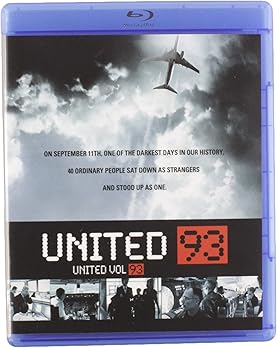
See ๐˜œ๐˜ฏ๐˜ช๐˜ต๐˜ฆ๐˜ฅ 93.

Kent’s Recommended Watch:
Paul Greengrass,
United 93

I use Gmail for lots of reasons, but mostly it’s for the ads. When I used Hotmail or Yahoo or iWon’s email service, I’d get all these obnoxious ads to refinance my mortgage rate or to meet sexy singles. The “meet sexy singles” ads have lately begun to border on pornography—one or two of these ads consist only of a pair of bikini-clad breasts. So much for a woman’s other attributes.

Gmail’s ads are nice and non-obnoxious, and I can actually customize them for things I’m actually interested in, like movies. I get ads for Rotten Tomatoes, a movie site which basically totals up all the movie reviewers on the internet and gives what percentage of them love or hate a movie. I hadn’t even heard of United 93 before this (I don’t watch much TV, so I never saw the TV spots) and suddenly there was an ad for it, plus the percentage of the reviewers who liked it. Coincidentally, 93 percent. But that’s an impressive percentage. So I read some of the reviews, and decided it might be worth $6.50.

United 93 is of course about one of the planes hijacked on 11 September 2001. It was headed for (we think) the Capitol, but before it got out of Pennsylvania airspace the passengers stormed the cabin and caused it to crash.

This is one of those movies which could have been done horribly wrong.

Remember Apollo 13? Now, try applying the screenwriting on that film to United 93. You’d have the sympathetic, heroic captain; the sympathetic, heroic head of the FAA, fighting the evil bureaucrats around him; the sympathetic, heroic military commanders, also fighting the evil bureaucrats around them; the wives and families at home, providing lots of pathos as they say good-bye to their loved ones; blah blah blah. Not only would it not work, it’d be offensive. The only way Ron Howard could get away with it is that nobody died.

Okay, now apply the screenwriting on Titanic. All the terrorist stuff is happening in the background, but what the movie’s really about is the growing romance between a plucky young proletarian from coach and an unhappy bourgeois first-class passenger. In the middle of the four-hour, $400M movie (even though the actual flight lasted maybe an hour), they meet, talk, dance, he does a nude sketch of her, they copulate in an automobile in the luggage compartment, run in slow-motion through the steam, and hold onto the edge of the plane as it plummets into Pennsylvania.

And then there’s Pearl Harbor. Again, mainly about a romance; then they go through the whole terrorist thing. Miraculously they survive, and tack on a happy ending where two of the passengers fly planes into the middle of Afghanistan and crash into their buildings in retaliation.

As you may notice, Hollywood doesn’t have the best track record with bringing historical disasters to the screen.

This one, however, was done right. The director, Paul Greengrass, decided to shoot it like a documentary—the sloppy-cinemetographer Steadicam™ jitteriness and all—and in real time as much as possible. No commentary; no over-dramatization (except there are, as usual, actors who overact); nothing other than what happened. (For the most part; you have to dramatize some things in order to keep the story moving). Many of the parts are even played by the actual people who did them.

There really wasn’t a better way that it could have been done, and I actually have no historical inaccuracies to gripe about, which is rare for me. It’s an intense movie, and it does not have a happy ending. But go see it. It’s excellent.

07 August 2005

Reading ๐˜‰๐˜ญ๐˜ถ๐˜ฆ ๐˜“๐˜ช๐˜ฌ๐˜ฆ ๐˜‘๐˜ข๐˜ป๐˜ป.

Kent’s Recommended Read:
Donald Miller:
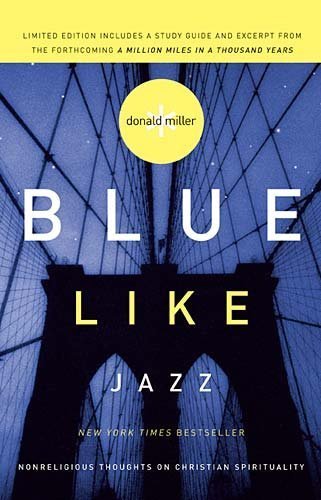
Blue Like Jazz

Kerry was off rafting today, so while I had a few hours free I read her new book, Blue Like Jazz by Donald Miller.

She’s likely going to tell me in a day or so, “You really ought to read this book,” and then I’ll have to confess that I read it Sunday afternoon, and that’ll just annoy her. ’Cause I didn’t just browse through it, I read it. The whole thing. That’s how quickly I go through books. This book will take her days to get through. So this annoys her a lot.

…Which makes no sense to me. I’m not annoyed that she knows more about music than I do. I expect her to; she has a B.A. in music education, for crying out loud. I expect her to excel in the things she has a knack for. As for me, my knack is reading an entire book in an afternoon. (Especially one that only has 256 pages, and several of them had one-panel cartoons on them. To be fair, it’s pretty slim compared to what I usually read. But it’s dense thinking.)

Since I read it, I may as well plug it a little.

The book’s title is misleading. He prefers the term “Christian spirituality” to Christianity because non-Christians don’t know what “Christianity” means (and, to be fair, neither do many Christians—and it’s supposed to mean Christian spirituality) and he calls his observations “nonreligious” even though they are. They aren’t couched in Christian-ese; maybe that’s what he means by nonreligious. The book is quite definitely Miller’s religious thoughts about Christianity; but what makes it unique is that he’s a member of the Christian Left rather than the Christian Right, and he’s a really good writer.

More stuff is available on his website.

17 June 2005

Batman and I go ๐˜ธ๐˜ข๐˜บ back.

When I was a kid, I didn’t want to be a doctor or lawyer. I wanted to be Batman.
 
Kent’s Recommended Watch:
Christopher Nolan:
Batman Begins

Saw Batman Begins today. Thumb up. Much better than the previous movies (Tim Burton’s freakshows and Joel Shumacher’s camp spectacles). Obviously the screenwriters have been reading Frank Miller’s Batman: Year One.

I’m a Batman fan from way back; back when I was a kid and the cheesy Batman TV show aired every afternoon on TV20 in Hayward. You’d expect a kid named Kent to like Superman more (and let’s not overanalyze that I eventually got into journalism), but only an alien can be Superman. Anyone, with effort, plus a billion dollars, can be Batman. (And it helps to have an obnoxious teenage partner in a red suit to attract the gunfire away from you.)

The TV show got me into the comic books. Batman was a lot cooler in the comic books; it was during the time when DC Comics was trying to copy Marvel Comics and create more realism and less cheese. Thus, Batman was kicking some serious ass. My friend Greg and I got into playing Batman all the time—except I was a kid, so I was “Batboy,” and he didn’t want to be Robin, so he became “Superboy.” When “called upon,” Greg and I would duck behind my dad’s van and change into our “costumes” (masks, sweatshirts with copyright-infringed logos, and trash-bag capes) and come out to “save the day”—from nobody in particular—then change back into our “secret identities,” which to our suprise weren’t fooling anyone. (Hey, we were eight.)

I eventually grew out of playing Batman, but I was Batman for every Halloween until sixth grade. By then, I had grown to be annoyed with the TV show. It was funny in its own right; but I sometimes wished it pick some other character to lampoon. Like that bowhunting Batman rip-off the Green Arrow. Or Captain Marvel; that was half a lampoon in itself. (There used to be a Captain Marvel TV show on Saturday mornings, but I remember it was slow and boring.)

The thing that always bothered me about Batman was that it was ridiculously easy to figure out what his secret identity was. It’s the toys. Batman has all these fantastic toys—a Batmobile, a Batplane, a Batcopter, and the gadgets—so who’s bankrolling the guy? Simple—who’s the richest guy in Gotham City? That’d be Bruce Wayne. “Follow the money,” as Deep Throat once pointed out.

I was pretty jazzed when Tim Burton’s Batman came out; despite the awful dialogue, it was better than any other superhero movie had been to that point. (Seriously. Watch the Superman movies sometime. The scripts are just terrible.) The trouble had always been that the directors were never serious comic book fans. I think the first comic book fan to direct a superhero movie was actually Spider-Man’s Sam Raimi, which is why that series has turned out so great. Batman Begins was cool (and I hate to say this, being a Batman fan) but I gotta admit the Spider-Man films are still better.

Next movie to see: War of the Worlds. Spielberg rules.

15 April 2005

Postmodernism and ministry.

Kent’s Recommended Read:
Tony Jones:
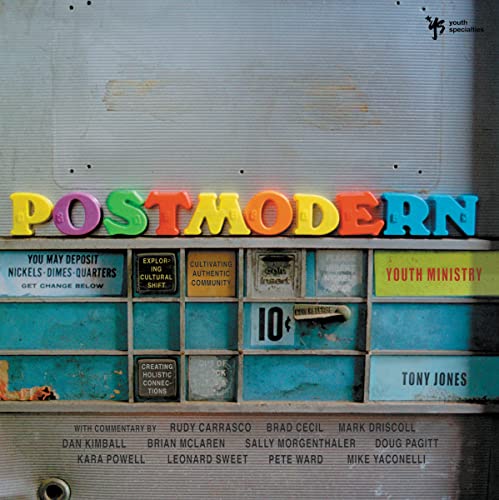
Postmodern Youth Ministry

 
If you’ve confused modernism with Christianity, of course you’re in a tizzy about how to reach my modernism-rejecting generation.

I must recommend a rather useful book I’ve been reading lately: Postmodern Youth Ministry by Tony Jones.

Some years ago I read How Now Shall We Live? by Nancy Pearcy and Chuck Colson (his name comes first on the books, but that’s to sell the book) which was supposed to be an update of Francis Schaeffer’s How Should We Then Live? but instead was a screed against postmodernism. The postmodern philosophy scares the crap out of them for one simple reason: If enough people believe in it, they figure the days of mass conversions may soon be over.

To me, that’s good news. So much of evangelism and discipleship consists of cookie-cutter one-size-fits-all methods instead of the individual, personal relationship that God wants to have with each of us—and wants us, as disciplers, to have with disciples. Most of the people I debate with on Xanga suffer, to various degrees, from the idea that all Christians must have the exact same understanding of God in order to be saved. Obviously they’ve never read the Prophets; they stick to the New Testament, which was written by nine people but they only read three of them and explain away any Gospel contradictions with logical gymnastics. They totally disregard the fact that God wanted scripture written from multiple viewpoints. God wants diversity. Why else would he have made everyone so different?

13 April 2005

Someone else’s Rant.

Kent’s Recommended Read:
Ronald J. Sider:
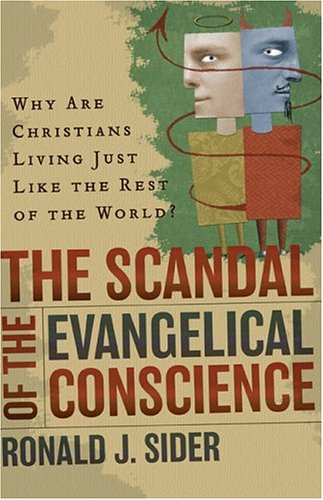
The Scandal of the Evangelical Conscience

Here’s a rant that isn’t mine, but I thoroughly endorse it—an excerpt from The Scandal of the Evangelical Conscience by Ronald J. Sider. Basically, Christians aren’t living any differently than everyone else; and what good is our witness if that’s the case?

An excerpt from the excerpt? Why certainly.

Graham Cyster, a Christian whom I know from South Africa, recently told me a painful story about a personal experience two decades ago when he was struggling against apartheid as a young South African evangelical. One night, he was smuggled into an underground Communist cell of young people fighting apartheid. “Tell us about the gospel of Jesus Christ,” they asked, half hoping for an alternative to the violent communist strategy they were embracing.

Graham gave a clear, powerful presentation of the gospel, showing how personal faith in Christ wonderfully transforms persons and creates one new body of believers where there is neither Jew nor Greek, male nor female, rich nor poor, black nor white. The youth were fascinated. One seventeen-year-old exclaimed, “That is wonderful! Show me where I can see that happening.” Graham’s face fell as he sadly responded that he could not think of anywhere South African Christians were truly living out the message of the gospel. “Then the whole thing is a piece of sh--,” the youth angrily retorted. Within a month he left the country to join the armed struggle against apartheid—and eventually giving his life for his beliefs.

The young man was right. If Christians do not live what they preach, the whole thing is a farce. “American Christianity has largely failed since the middle of the twentieth century,” Barna concludes, “because Jesus’ modern-day disciples do not act like Jesus.” This scandalous behavior mocks Christ, undermines evangelism, and destroys Christian credibility.

26 March 2005

Watching Christian movies.

Kent’s Recommended Watch:
Mel Gibson:
The Passion of the Christ

Saw The Passion of the Christ again tonight at church. They announced it by saying, “Come at seven; we’ll have some popcorn made and some refreshments…” I thought: This is not a popcorn movie. If you can eat popcorn through this movie, there’s something wrong with you.

It’s not that the movie itself is so good that it emotionally picks you up and body-slams you. It is a good movie in itself; and there are lots of horror movies with more gore. The difference is that this is someone I know. Put it this way: If you were watching your best friend getting beaten to death before your eyes, it would freak you out. And lots of Christians consider Jesus to be their best friend, or their Lord, or at least the guy that they talk about so much at church that they recognize the pastor is fond of him. So it’s traumatic. But it certainly helps you appreciate him.

(And, I’ve found, The Passion had led me to appreciate Jesus’s mom more. Protestants tend to underplay her contribution to his life and ministry because we feel the Roman Catholics overdo it; but under-appreciating her isn’t the solution. She was a really brave woman; and you’d have to be a strong woman in order to raise God.)

Kent’s Recommended Watch:
Brian Dannelly:
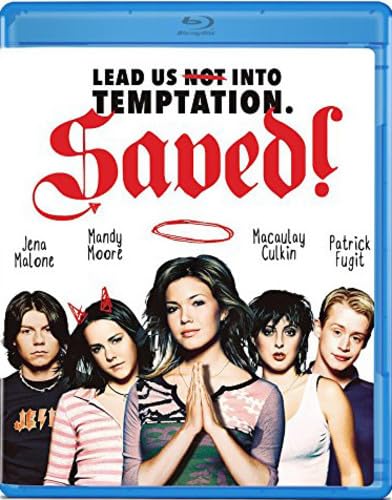
Saved!

And, just for contrast, I also saw Saved! today, which almost gave me flashbacks from my high school youth group. (Heck, there are some people at Bethany who are like that… but I won’t name names. Y’all know who you are.) Yeah, I remember my early days as a young Christian hypocrite… figuring that God’s will was for every Christian to be successful, and popular, and eventually make lots of money so we could help get conservative anti-abortion candidates elected to office. (Because that was the only issue we cared about; screw the poor and homeless, they did it to themselves.) Fortunately, God saved me from that too.

So, an interesting Good Friday…

Abraham Lincoln died on Good Friday too, you know.

11 March 2005

Another item on the reading list.

Kent’s Recommended Read:
Umberto Eco:
Foucault’s Pendulum

I had time; I figured I'd try to read Foucault's Pendulum again. I bought the bloody book in 2000 and never got past the 30th chapter. Not that it isn’t a good read; I just find I have a lot of other things to do and put it away. Since I don’t have much vacation left, I fear I may not get past the 90th chapter before I have to go back to school.

24 February 2005

More bad theology in music.

Kent’s Recommended Listen:
Sixpence None the Richer:
The Fatherless and the Widow

There’s a track on this CD I’m listening to, called “Soul,” which always annoys me. It’s about a father who’s dead; fatalistically, the writer decides we’ll never know his condition until he’s joined in the afterlife.

It’s funny… Christians often say, “Well, we won’t know that until we’re in heaven with Jesus.” Then they use the exact opposite argument in evangelism: “You don’t want to wait until you’re dead to find out your eternal destination!”

Isn’t the whole point behind the revelations in the bible that we don’t have to wait until the afterlife to find stuff out? Yet I hear this all the time from non-charismatics. They seem to be perfectly satisfied with a God who doesn’t talk to them anymore. (Must be easier on the conscience.) I couldn’t be. I’d be pissed at God if he cut me off that way. Who wants to follow a God who won’t answer your questions?

(I should qualify that… Sometimes God answers my questions with “You don’t need to know that” or “It’s beyond you” or “I already said it in Scripture; read your bible.” They’re not always answers I like, but they’re answers. They’re not nothing.)

23 February 2005

๐˜›๐˜ฉ๐˜ฆ ๐˜”๐˜ฆ๐˜ณ๐˜ค๐˜ฉ๐˜ข๐˜ฏ๐˜ต ๐˜ฐ๐˜ง ๐˜๐˜ฆ๐˜ฏ๐˜ช๐˜ค๐˜ฆ, and shopping and angst.

Kent’s Recommended Watch:

Michael Radford:
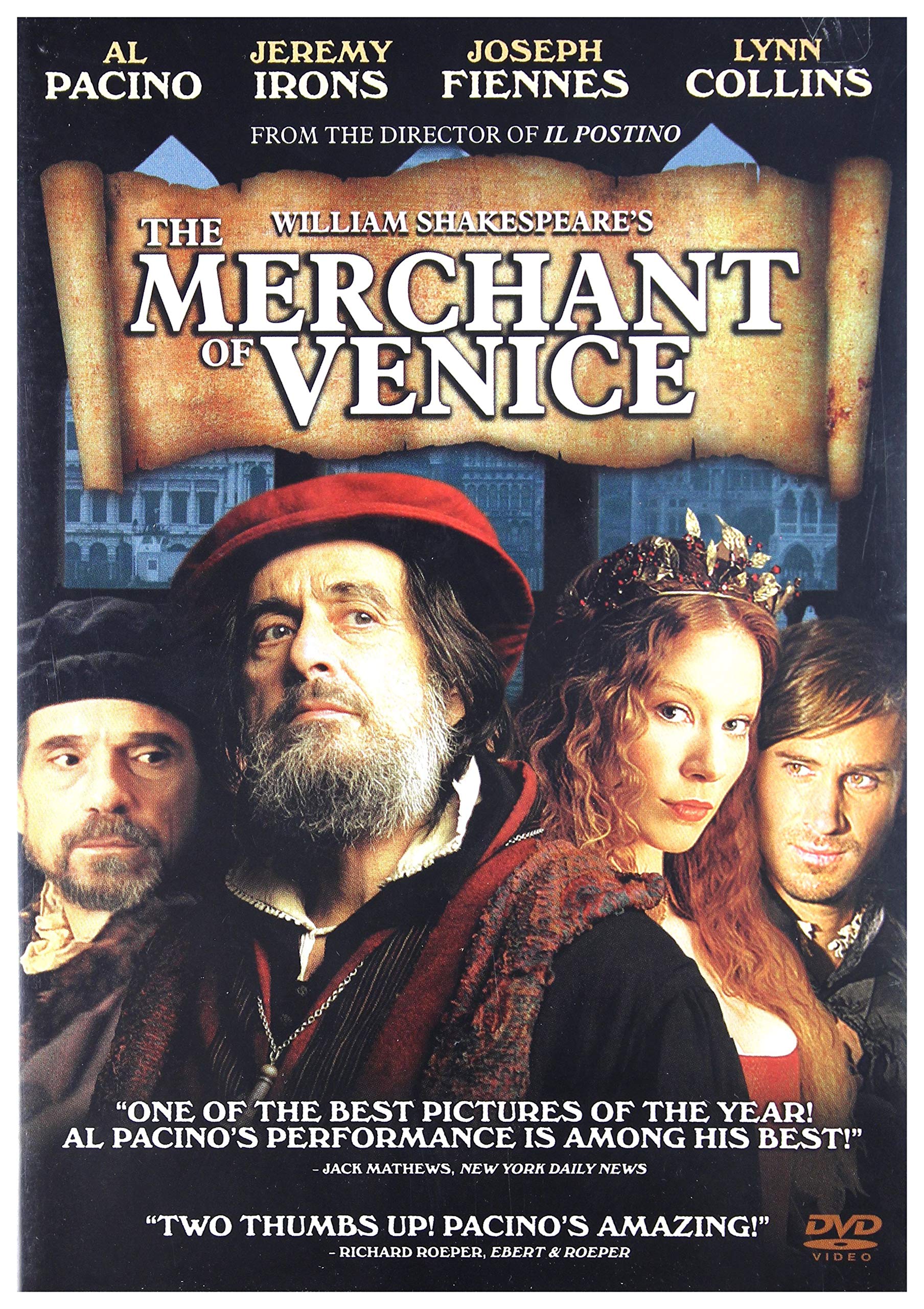
The Merchant of Venice

Saw The Merchant of Venice today, which I reviewed below. Al Pacino should have got some kind of nomination for it, even though Jamie Foxx is gonna win the Best Actor Oscar.

Afterwards I went browsing at a thrift store… It’s always frustrating to buy clothes there, which is why I seldom bother. I don’t want to look like someone who’s still trapped in the ’80s… or ’70s… or even ’60s… Most guys never throw out their clothes until they’ve got holes in them, and you don’t give holey clothes to thrift stores. So most of the men’s clothing there are the result of (a) the wife who’s had enough and decided to donate all the 20-year-old clothes on his behalf, or (b) the heirs who just buried the guy and don’t see the point in keeping his clothes. The men’s selection is therefore horrible.

So why do I bother? Because I don’t want to look like another yutz who shops at the Gap; and because I’m cheap. Honestly, I don’t want to pay $40 for a shirt and $50 for slacks when I can get the same thing elsewhere for $30 less per item. Why do you think I buy most of my stuff through Amazon and eBay? (Heck, I’d buy groceries through them if I wasn’t worried about the stuff being tainted or way past the expiration date.)

22 February 2005

Another negative girl, another useless professor, another writer in hell.

You know the type: thinks everyone at Bethany sucks, thinks all the Bethany professors suck, thinks her job sucks, thinks all the "popular" kids here suck, thinks most music, movies, and TV shows suck, and never says anything that isn’t vaguely laced with sarcasm. Be honest. You’ve seen such people.

I spent an unpleasant 30 minutes with one such person over the weekend. It was like having lunch with the high school version of myself. Afterwards, I felt the need to bathe, and scrape off some of the evil.

30 January 2005

Fear and loathing and ๐˜๐˜ฆ๐˜ข๐˜ณ ๐˜ข๐˜ฏ๐˜ฅ ๐˜›๐˜ณ๐˜ฆ๐˜ฎ๐˜ฃ๐˜ญ๐˜ช๐˜ฏ๐˜จ.

Kent’s Recommended Read:

Sรธren Kierkegaard:
Fear and Trembling

Again, I’m not actually reading the version at right. I downloaded it free off the internet.

Kierkegaard’s a weird read. He reminds me of pastors who have a really simple message… at the end of their sermons. Meanwhile, you’ve got to tolerate fifteen minutes of pseudo-spiritual babbling about what it all means, and how frustrating it is to seek out the meaning behind it all.

I feel like throttling the dude and telling him, “I got a life to live; get to the point, you over-analytical, insecure, Danish pansy. So faith isn’t as simple as you once thought. Welcome to Christian maturity! Now that you’ve recognized there’s more to Christianity than fundamentalism, stop whining about how difficult it’s all become. Jesus never promised it would be a picnic.”

He does exhaust my patience, you see. But that’s because he, like so many philosophers I’ve read, doesn’t go anywhere. Many of them have two or three really good ideas; the rest of their treatises are padding to make the thing slightly bigger than a pamphlet. Some are better at padding than others; Kierkegaard’s got a lot of really good sayings, but it’s all jumbled together (and, to be fair, suffers from the usual awful translation by some academic shmuck who wants to translate word-for-word instead of into contemporary English).

I gotta pick better light reading.

23 November 2004

About the music.

Kent’s Recommended Listen:
U2:
How to Dismantle an Atomic Bomb

The new U2 album rocks. So does iTunes.