
Kent’s Recommended Read:
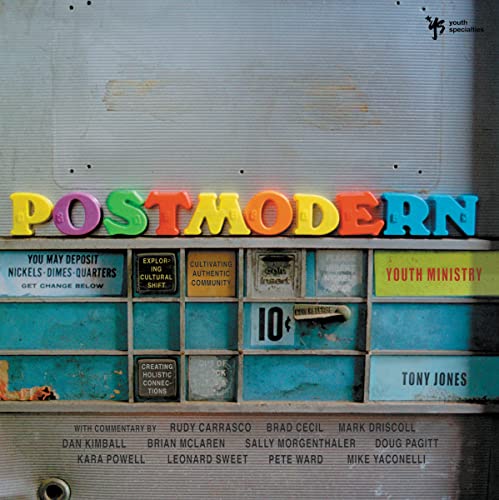
Tony Jones:
Postmodern Youth Ministry
If you’ve confused modernism with Christianity, of course you’re in a tizzy about how to reach my modernism-rejecting generation.
I must recommend a rather useful book I’ve been reading lately: Postmodern Youth Ministry by Tony Jones.
Some years ago I read How Now Shall We Live? by Nancy Pearcy and Chuck Colson (his name comes first on the books, but that’s to sell the book) which was supposed to be an update of Francis Schaeffer’s How Should We Then Live? but instead was a screed against postmodernism. The postmodern philosophy scares the crap out of them for one simple reason: If enough people believe in it, they figure the days of mass conversions may soon be over.
To me, that’s good news. So much of evangelism and discipleship consists of cookie-cutter one-size-fits-all methods instead of the individual, personal relationship that God wants to have with each of us—and wants us, as disciplers, to have with disciples. Most of the people I debate with on Xanga suffer, to various degrees, from the idea that all Christians must have the exact same understanding of God in order to be saved. Obviously they’ve never read the Prophets; they stick to the New Testament, which was written by nine people but they only read three of them and explain away any Gospel contradictions with logical gymnastics. They totally disregard the fact that God wanted scripture written from multiple viewpoints. God wants diversity. Why else would he have made everyone so different?
Pearcy and Colson are steeped in a Christianized version of modernism (which they naively believe isn’t modernism because it’s Christian) and only look at the postmodern world from that worldview—in fear. They believe they have to defeat the philosophy before they can adequately preach the gospel. If you believe that, you are guaranteed to spend all your time tilting at windmills as people die unreached.
In my studies on postmodernism, I have concluded that my own worldview is a lot closer to it than this so-called “Christian worldview” that the anti-postmoderns are pitching. I don’t believe the world has a common history; it’s all based on perspective. I don’t believe logic is absolute; God is downright illogical sometimes. (“The last will be first”—try applying that proverb sometime. Your brain will spin.) Contrary to C.S. Lewis, I don’t believe every human is born with an innate moral sense. (Sorry if this kicks the props out from under Mere Christianity, but Lewis was a modern, after all.) If that were true than babies wouldn’t fight over toys. Morals are conditioned; and the reason a lot of kids are growing up morals-free is because they were never truly parented.
Unlike a lot of useless youth ministry books I have read, Jones’s book deals with the fact that the youth of America have a postmodern mindset, that it’s not a fad or something that can be countered by modernist logic (like modernism is of God anyway), and that evangelism and discipleship can take place even so. In fact, postmodernism is probably a lot closer to the first century mindset that Paul dealt with than the philosophies of the Middle Ages to today.
I could go into more detail, but buy the book, dangit. It’ll make you realize what on earth was wrong with every youth pastor you grew up with. It’ll be one of the most valuable books you have.