
The theme is 10 books which have had the greatest impact on me. It’s been bouncing round the internet, and Wednesday I got nominated to share my own list, and of course every book has a backstory. Giving the list without the context made no sense to me, so I got to writing.
Not nominating anyone else to share their 10, because I’d want to know the story behind each selection, and I don’t expect them to write 500-word essays on each of them like I did.
Not counting bible either, ‘cause that one’s way too easy. Any Christian who doesn’t have bible influencing them is asking for it. But any Christian who includes it is trying to escape 10 percent of their thinking.
So here’s the list.
1 The Encyclopedia of Comic Book Heroes, Vol. 1: Batman,
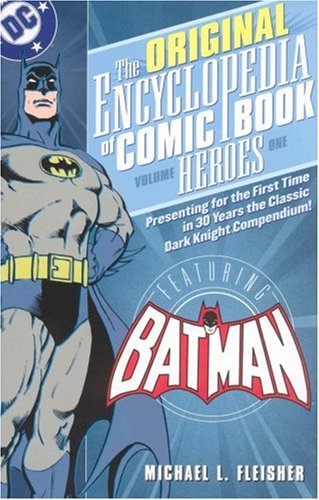 Michael L. Fleisher.
When I was a kid, I was a big fan of Batman, via the TV show. (Which is finally gonna be out on
How was it influential? Well, my three main interests as a kid were drawing cartoons, playing with Legos, and playing Batman. And the Batman encyclopedia (not so much the TV show) was where I got all my Batman ideas. I read the heck out of this book. I wore it out like a bible.
2 Evidence That Demands a Verdict,
 Josh McDowell.
In high school, my youth pastor taught us apologetics instead of theology. He didn’t know any better.
The purpose of apologetics is to know why we believe as we do—that there’s logic and history and evidence and experience behind it all. But Fundamentalists don’t believe whatsoever that our Christianity should be based on any of those things. It should be based on two, and only two, things: Bible, and an overwhelmingly pure trust in this bible. Add anything more, and it’s not faith. They rip on Catholics and mainliners all the time for adding their traditions to bible ’n faith. (And they’re in utter denial about their own traditions, like premillennial dispensationalism, biblical literalism, congregationalism, and so forth.)
So Fundies don’t practice apologetics for apologetic reasons. It’s for an entirely different reason: To debate skeptics and pagans, and “prove” to them the bible is valid, historically accurate, and should be interpreted literally.
Till I finally studied theology, Evidence functioned as my theology book. Yeah, that’s terrible, but I didn’t know any better. And yeah, it didn’t work: Everyone I argued with remained unconvinced. Dad’s still an atheist. Atheists I met in college thought my arguments were ridiculous. (To be fair, they were.) Made me feel better and superior about my blind faith, but didn’t make me any closer to God. If anything, it pushed me further away, ’cause argumentativeness and pride are works of the flesh.
I know; the book wasn’t influential in a positive way. But nobody said they had to be positively influential. Just influential.
3 Don Quixote,
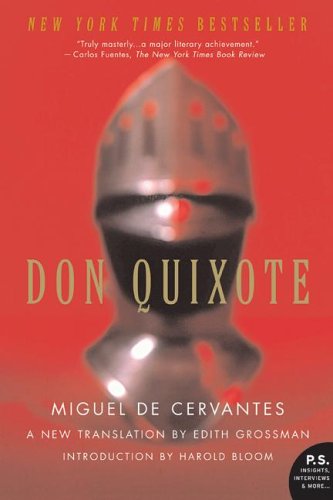 Miguel de Cervantes.
First time I ever read it was in junior high, and it was SO BORING. So awful and stupid and annoying and I stopped reading it as soon as I was permitted.
Then in high school, as part of Spanish 4, we had to read it. In the original Spanish. I wasn’t looking forward to it at all. Our teacher, Sra. Lee, said it wouldn’t hurt to familiarize ourselves with it at the beginning of the school year by reading it in English first. So I went to the public library, which had a wholly different edition of Don Quixote, checked it out, took it home… and couldn’t stop laughing at it.
Different edition. Different translator. Made all the difference.
Yep, I actually read Don Quixote (the first part, anyway) in the original that year. Yeah, it loses something when you’re not as familiar with the language. But I remembered all the humorous bits from the translation, so I was able to catch them when they came around.
You’d think, since I had encountered different translations of the bible, that I’d know a different translator makes a huge difference. But I only applied that thinking to bible; never to other translated works. Nowadays, I’m quick to assume if an ancient book is boring, it’s the translator’s fault. It usually is.
 All the Words (2 vols.), Graham Chapman, John Cleese, Eric Idle, Terry Gilliam, Terry Jones, & Michael Palin.
I was a casual Monty Python fan in high school. There wasn’t much point in being a manic fan, ’cause I could never figure out when my local
Then I found All the Words in the campus library, and enjoyed it so much I had to buy the book. And buy volume 2. And track down every single episode, which was easier to do since they were put on videotape in 1989. I checked every single tape out from Tower Video and watched them, in as much sequence as I could. Hard to do; they were popular.
I found a videocassette two-pack of And Now for Something Completely Different and Monty Python and the Holy Grail, and watched them religiously. The instant Holy Grail was on
Python, like me, goes back and forth between intellectual humor, and silly ridiculous stupid-funny japes. Who says you can’t like both? Who says you can’t put both of them together in one sketch? My mother, however, assumed Python is representative of “British humor” (not even close) and wouldn’t watch British comedies for the longest time because she’s not amused by either the highbrow or lowbrow stuff.
Yeah, this sorta segued into a story about a very influential TV show. But it began with a book, you see.
5 Fear and Loathing on the Campaign Trail ’72,
 Hunter S. Thompson.
Yeah, you’d think my favorite Thompson book would be Fear and Loathing in Las Vegas, same as everyone else. That’s usually their first exposure to Thompson, and after that introduction, everything else appears a lesser work. My first exposure was his compilation of old San Francisco Examiner columns, Generation of Swine. I went from there to Campaign Trail, and encountered Thompson the journalist before I encountered Thompson the semi-fictional mad diarist.
We don’t share the same politics, he and I; never did. Inserting yourself into the story so you can rip it to shreds from the inside out like a chest-bursting alien—the style of journalism Thompson calls “pure gonzo"—is also not my style whatsoever. The tendency to speculate wildly, so much so you start to confuse wild flights of insanity with factual reporting, violates all sorts of journalism rules, and I can’t approve of that. But man, Thompson’s fun to read.
And that was his influence on me: Aiming for being fun to read. You can rehash the cold hard facts, or you can tell the tale in a blindsiding way, like water balloons at a wedding. My peers coveted Thompson’s mad adventures, figuring the way to have wild stories is to embrace a wild lifestyle. That, I didn’t want; real life can get crazy enough as it is without adding to the insanity. But they missed the point. You don’t get a twisted tale by living a twisted life. You do as comedians do: You take the familiar environment we’ve dulled ourselves into not noticing, and expose the twists already within it.
Thompson’s experiences in the 1972 presidential campaign were the very same as every other big-media reporter. Difference was, Thompson covered everything on the bus; all the crap nobody else covered, because it was unseemly or embarrassing or might get you ejected from the bus in political revenge. (Which happened to Thompson, though to be fair, giving your press credentials to a deranged hippie is a mighty good reason to eject you.) He never expected to cover politics again, so figured he could burn all his bridges and get away with it. Ever since, other reporters have followed his lead, and politicians and their handlers get away with less and less. Good.
6 Genesis 1-15 (Word Biblical Commentary),
 Gordon J. Wenham.
I grew up a young-earth creationist, as Fundies do. But young-earth creationism has an inherent problem: They take the bible literally. And it’s not possible to take the bible literally.
They believe, as Genesis 1.6 describes, that God separated waters above from waters below, and in so doing made the sky. They believe, as Genesis 1.17 describes, that God put the sun and moon and stars in the sky. Thing is, that’s below the waters above. The sun is 125,000 kilometers away; the stars ridiculously large orders of magnitude further away; yet somehow behind them there’s water?
You’ll find no young-earth creationist actually claims this is so. They dismiss where Genesis puts the sun, moon, and stars, and pretend the waters above the sky, the "firmament,” was instead a massive cloud canopy beneath outer space. But it no longer exists ’cause God had it fall to earth for the Flood.
Yet this isn’t what Psalm 148.4 describes: The psalmist clearly believed there were waters above the heavens in his day; beyond the furthest galaxies, which never fell to earth. Hey, if you’re gonna demand I be literal, and tell me I have no other options, I’m gonna be literal. It’s not my fault my literalness comes back to bite ya.
I also struggled with the idea the earth and universe look much older than 60-some centuries old. Young-earthers try to solve the conundrum by claiming God created the universe with the appearance of age. Just like Sunday School pictures depict Adam and Eve created as full-grown adults, even though they were a day old. Supposedly that was our proof: Adam and Eve were created adult, ergo so was the universe.
But they trained me too well to be a literalist. Nowhere does Genesis claim Adam and Eve were created adult. Those are pictures from Sunday School, not statements from scripture. I know; you never imagined Adam as a toddler, right? But the art always makes him an adult male—somehow white, clean-shaven, and potty-trained.
Young-earthers call it the appearance of age. In fact it’s the illusion of age. If God created the cosmos to look old, it means he didn’t mean for the casual observer to observe his handiwork and recognize it for what it is, i.e. not old. Nor the wise observer either: Supposedly a scientist should be able to deduce the universe’s youth. Yet none of them have… unless they’re young-earthers, who fudge the data till it fits their prejudices.
I can’t accept that God is deceptive. Yet for many years I didn’t know any other way to interpret Genesis but literally. And then I came across the Word Biblical Commentary.
Wenham interprets Genesis as a formation story, as a rebuttal to ancient pagan creation stories where the gods fought over a pre-existing creation. It struck me as a reasonable and valid way to interpret the scriptures. They’re not scientifically true, nor do they have to be. They weren’t written to explain how God made things; just to explain why.
At first I used this interpretation as a way to defend young-earth creationism: Hey, folks, we don’t have to interpret the bible quite so literally, so maybe the firmament was a cloud canopy below the highest heavens. Young-earth creationism could be true. (Yeah, I was a bit dense.)
After talking with a few old-earth creationists, I realized they had just as much a truth claim as the young-earthers… and then again, so did the evolutionists. What finally tipped me over to the evolutionists’ side was my respect for science: They practiced it. The young-earthers didn’t. The evolutionists had scientific evidence. The young-earthers had theories, which they believed really hard, but when it came time to prove their theories, they pish-poshed science and quoted bible out of context. I have too much respect for both bible and science, so that was the end of that.
No, I don’t believe the universe happened on its own, or is in any sense a cosmic accident. I fully believe God’s behind creation, in its entirety. I just happen to have no trouble with the idea he used natural processes, the same ones scientists posit, to create it. But as to why he created it: Turn to Genesis 1. He created it all by himself, and he called it good.
7 This Present Darkness,
 Frank Peretti.
No, it’s not for the reason you think.
I had been a Pentecostal for a few years, and every so often one of our “prayer warriors” would get up and start praying for angelic aid against demonic forces. They’d get specific. Really weirdly specific. None of it was biblical, but it was pretty consistent language and theology found throughout all the “prayer warriors” I knew. I assumed they must’ve all heard this stuff from the same pastor, or read the same book on spiritual warfare.
It never, ever occurred to me it all came from a novel.
One weekend I was at a friend’s house, and everybody had gone to bed at a ridiculously early hour, and I was awake in the guest room, expected to sleep before midnight. Joshua was in the bookshelf, so I read it. Good book. Not the point of this story, though.
Next night, same schedule. This Present Darkness was also in the bookshelf. I started on it, and couldn’t put it down. Not because it was good, ’cause good Lord it’s not. But because here was all the “prayer warrior” cheesy imagery and bad theology and everything. It was like the end of a mystery novel, when the detective tells the whole story and everything now makes perfect sense.
Since then, I’ve never dismissed how influential popular Christian fiction can be when it comes to popular Christian theology. Namely bad theology. It’s why I bothered to read the Left Behind novels, despite how they got increasingly, despairingly worse and worse as they ground slowly to the end of the dispensationalist timeline, to a version of Christ’s second coming which had plenty of predictable mayhem, blood, and gore, and very little joy.
8 The Discarded Image,
 C.S. Lewis.
His annual Cambridge lectures on the medieval worldview. It’s not a Christian book; it’s an academic one. But since I was interested in all things Lewis, I read it anyway.
Part of the reason I was interested in all things Lewis was apologetics (’cause he was into it, and many apologists are fans) and worldview studies (same reason). Yet here’s the book which undermined everything I then believed about the Christian worldview.
Lewis described the medieval worldview for his medieval literature students. You can’t interpret medieval thinking through a present-day lens; you gotta know where they were coming from. So Lewis explained the way both medievals and ancients revered the written word, embraced all written words as authoritative, and tried to construct a framework where all of it could harmoniously work together—even when pagan philosophers and the scriptures contradicted one another. (Thomas Aquinas’s Summa Theologica is a good example of how Thomas tried to harmonize bible and Aristotle.)
I found it fascinating for two reasons. One is Lewis’s fiction. Apparently he’d been basing all of it on the medieval worldview; not the present-day one. (Same with J.R.R. Tolkien and other medievalists.) No wonder his Space Trilogy made no scientific sense. Wasn’t meant to.
Secondly, Lewis’s conclusion—that the medieval construct was clever, consistent, and worked perfectly, and yet was entirely wrong—made me begin to doubt everything Francis Schaeffer, Chuck Colson, and my Fundamentalist upbringing taught about the Christian worldview. Their argument was how well political conservatism and Calvinism fit together; surely this is evidence of its validity. Well, having read Discarded Image, not anymore.
9 In His Image,
 Philip Yancey & Paul Brand.
Brand was a missionary doctor, Yancey a Christian journalist, and together they compared the body of Christ with an actual human body. That part was sorta interesting.
But Brand’s studies on pain—in treating leprosy patients and diabetics—was the real eye-opener. Pain, most of us assume, is bad. Pain, according to Brand, is nonetheless necessary: Pain warns us to stop doing as we’re doing to ourselves, lest we harm ourselves further. The people Brand worked with, who couldn’t feel their extremities, would regularly injure themselves horribly, simply because their pain receptors never warned them where to stop.
Till this book, I just assumed pain was purely a curse. As must be various other things in the world which we consider awful. So it made me rethink theodicy. What other useful things have we humans been misinterpreting as negative and devilish, when they were nothing more than good things gone wrong?
10 Lies My Teacher Told Me,
 James W. Loewen.
I first became a history teacher at a Christian junior high. I was given brand-new American history textbooks, which the school had just purchased from Bob Jones University. Apparently their salesman had impressed our principal very much. (And apparently our principal knew nothing about their anti-Pentecostal biases, but that’s a whole other issue.)
I immediately began to butt heads with the text. ’Cause I studied plenty of American history in college. To fulfill my general ed social science requirements, I took nine units’ worth; then another nine from a media point of view in the journalism program, then another nine in religious history from the biblical studies program. And that doesn’t count all the history I read for fun. The Bob Jones book got a lot wrong. Which says all kinds of things about what they teach their own students.
Some of it was the typical conservative “America: God’s new Chosen People” mindset. Bob Jones U. is in South Carolina, so the Civil War and slavery was entirely from “the War of Northern Aggression” and “the South shall rise again” mindset. Religious movements were either Fundamentalist or branded as wrong. Atrocities towards blacks, Indians, Irish, Catholics, Chinese, Japanese, and our opponents in various wars, were downplayed or left out. (Well, except the South.)
To be fair, secular American history textbooks downplay all the same atrocities, and that’s what Loewen’s book is about: How American history classes in American public schools teach patriotism, not history. In those classes, history isn’t about learning from our mistakes; it’s about our glorious past and promising future.
Anyway, I read Loewen’s book at about the same time I started teaching history. I made a point of inserting the bad bits of American history back into the story—along with theological statements about total depravity, about how we’re supposed to be light in the darkness and do better than our forebears, and about vigilance against repeating evil—and many denunciations of the textbook. Which the kids found really entertaining. Junior highers love hearing that adults can be wrong. Our principal, not so much; he didn’t like hearing he had spent a few thousand dollars on crappy textbooks. But he switched schools at the end of the school year anyway, and didn’t have to deal with the many complaints of our history teachers since.
As for vigilance against repeating evil: I’ve been watching out for over-patriotic history books ever since.
That’s the ten. There are many other books I love, and have read again and again. There are other books I’ve read, and don’t care to read again, but they stuck with me. But none have been as influential as the above.
I think I’ve stated many times how Stephen King’s The Stand is my favorite End Times book; how Mark Twain’s Connecticut Yankee is one of my favorite classic novels; how I enjoy Sherlock Holmes stories and Patrick O'Brian’s naval novels; how I regularly return to C.S. Lewis’s works for a bit of clever thinking; how I nowadays tend to read a bunch of history and social-science and philosophy and theology, and call it “light reading.” But y'all wanted influences, so there y'all go.